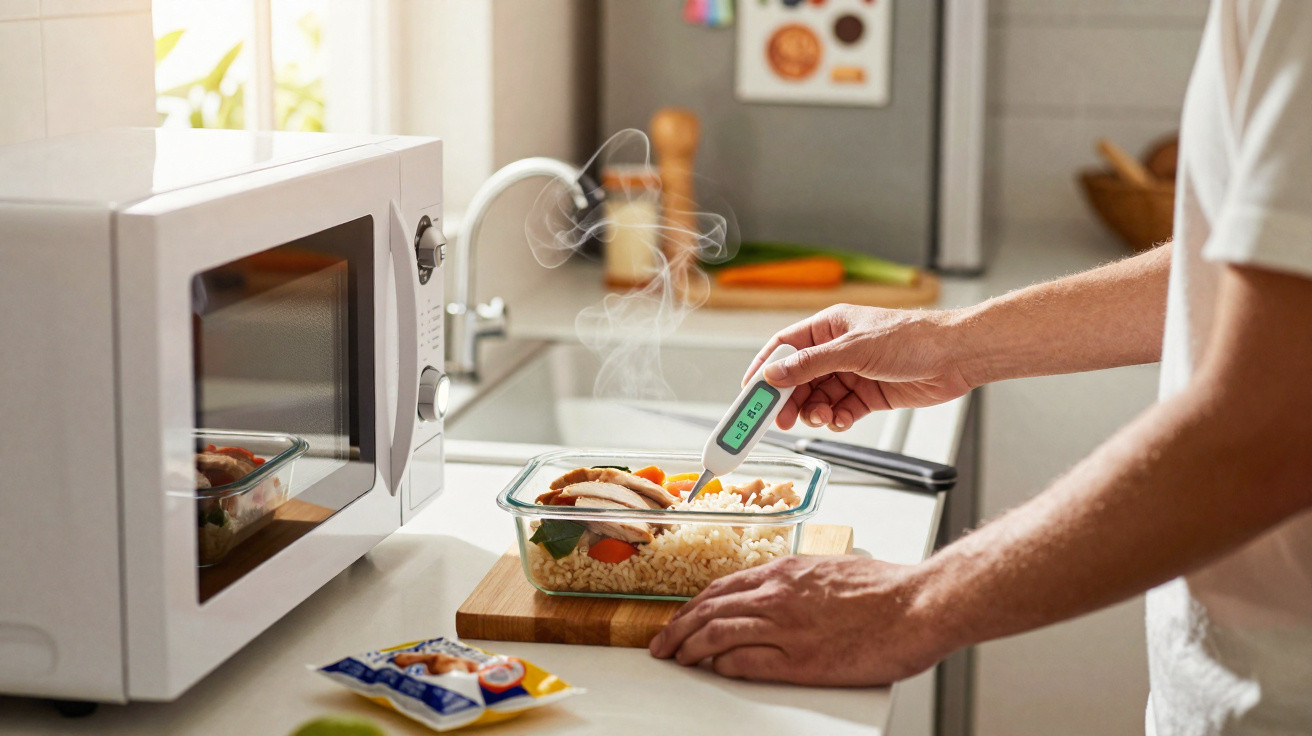
At first glance, it seems convenient: put a frozen meal in the microwave, wait a few minutes, and it is ready. It is steaming on the outside and hunger is calling, so it goes straight onto the plate. According to nutrition experts, that is exactly where the problem lies: warm does not necessarily mean safe. Some areas of the food can remain cold or merely lukewarm, creating an ideal breeding ground for germs.
Why a microwave heats food unevenly
An oven warms food from the outside in, in a relatively steady way. A microwave works differently: its radiation primarily stimulates water molecules within the food. This does not happen evenly, but in irregular, localised bursts.
As a result, three temperature zones can exist at the same time:
- a very hot outer area
- a merely lukewarm layer just beneath it
- a centre that is still frozen
The greatest risk is found in the lukewarm areas: too cold to kill germs, yet warm enough for them to multiply rapidly.
Food can look perfectly cooked from the outside: steam rises and the sauce is bubbling. Yet the middle may still be firm, frozen or only slightly warmer than fridge temperature. If the dish is then left only briefly before being eaten, it creates ideal conditions for bacteria.
The usual mistake: partly defrost, leave it out, eat it lukewarm
A common routine in many kitchens goes like this: a frozen meal is put into the microwave on “cook” or maximum power, removed when it is half warm and half cold, then left on the worktop for an extended period.
Everyday examples include:
- Frozen lasagne briefly microwaved, then left on the table for 1–2 hours before being reheated
- A frozen chicken fillet “softened” in the microwave, then left sitting while lukewarm
- A portion of rice from the previous day warmed briefly, then kept at room temperature
This is precisely the critical stage. If food remains for longer than around two hours in the so-called “danger zone” between 10 and 55 degrees, certain germs can multiply substantially. If it is not subsequently heated completely and thoroughly enough, those germs - or their toxins - remain in the meal.
Meat, fish and rice require particular care
Meat and fish: an ideal medium for bacteria
Animal products contain plenty of water and protein, both of which microorganisms thrive on. Poultry, mince and fish are particularly vulnerable. When only the surface becomes warm during defrosting while the centre stays frozen, a risky combination develops:
- Outside: lukewarm, moist and protein-rich - ideal conditions for germs
- Inside: frozen or very cold - the following cooking time is often insufficient to heat everything through safely
A “half” reheating process of this kind can typically cause gastrointestinal symptoms, ranging from nausea and abdominal cramps to diarrhoea. Children, pregnant people, older adults and anyone with a weakened immune system are especially susceptible.
Rice: the underestimated risk on the plate
Rice is often cooked in advance and stored. Many people reheat it in the microwave without considering the potential hazards. However, rice grains can contain spores of the bacterium Bacillus cereus. These survive ordinary cooking and can later produce toxins.
Critical points with rice include:
- cooling it too slowly after cooking
- leaving it at room temperature for too long
- heating it only briefly and unevenly in the microwave
If rice is left lukewarm for too long and then heated only in isolated spots, some germs remain active - and the toxins already formed will not disappear during reheating.
There is also a nutritional consideration: major temperature changes, such as repeatedly heating food rapidly and cooling it again, can partly destroy sensitive vitamins, including vitamin C and some B vitamins. The meal may still be filling, but it provides fewer micronutrients than expected.
Defrosting food safely: the right approach
The fridge is the gold standard
The safest option remains the fridge. Food defrosts slowly and evenly there without entering the dangerous temperature range. Although this takes planning, it significantly reduces the risk of foodborne infections.
- Put frozen meat or fish in the fridge the evening before
- Place it in a bowl so defrosting liquid cannot drip onto other foods
- Cook it promptly once it has fully defrosted
For larger joints of meat, allow 12 to 24 hours; thin fillets generally need one night.
From the freezer straight into the pan or pot
Many foods can be cooked directly without defrosting first. This saves time and reduces the risk of germ growth:
- Add frozen vegetables directly to a pot or frying pan
- Cook frozen fish fillets through slowly in a frying pan or oven at a lower heat
- Prepare ready meals in the oven according to the packet instructions rather than only partly defrosting them in the microwave
The key is to extend the cooking time sufficiently and check that the product is genuinely hot right through to its centre.
If the microwave has to be used
In everyday life, the microwave cannot always be avoided. Anyone using one should follow a few basic rules to reduce the risk:
- Use the defrost programme: This dedicated setting uses lower power and distributes heat more evenly.
- Choose small portions: It is better to divide thick blocks beforehand so the radiation can reach the middle.
- Stir or turn food during heating: This helps spread the hotter and cooler areas more evenly.
- Cook it through immediately afterwards: Once defrosted, food must not be left standing; it needs to be heated completely.
- Aim for a safe core temperature: As a broad guide, the centre should reach at least around 70 degrees and remain there for several minutes.
The microwave can help save time - but it is not a substitute for fully cooking food, especially sensitive items such as poultry, mince or fish.
How to spot critical situations
Several warning signs indicate that heating has gone wrong:
- Steaming on the outside while still firm or slightly frozen in the middle
- Noticeably different temperatures when tasting separate areas
- Lukewarm food being left on the table for an extended time
If this happens, it is better to heat the dish thoroughly again rather than assume it will be fine. For meals intended for children in particular, a thermometer is worthwhile, or at least a very careful temperature check using a fork and a cut through the centre with a knife.
Nutrients, hygiene and planning: what else matters
The discussion about proper defrosting and reheating is not solely about the fear of “spoiled food”. Hygienic routines keep exposure to germs low, protect the gut and preserve more nutrients.
People who plan meals can take a smarter approach: after cooking, large portions should be cooled quickly, stored in shallow containers in the fridge and reheated fully within one to two days. Frozen food should be moved into the fridge in good time, rather than being hurriedly half-defrosted in the microwave at the last minute.
For many people, a simple everyday rule helps: food is safe when it has been properly hot throughout - not just on the surface. Understanding the microwave as a tool for pre-heating rather than the sole cooking method significantly lowers the risk and makes it possible to enjoy frozen food without unease.

















Comments
No comments yet. Be the first to comment!
Leave a Comment