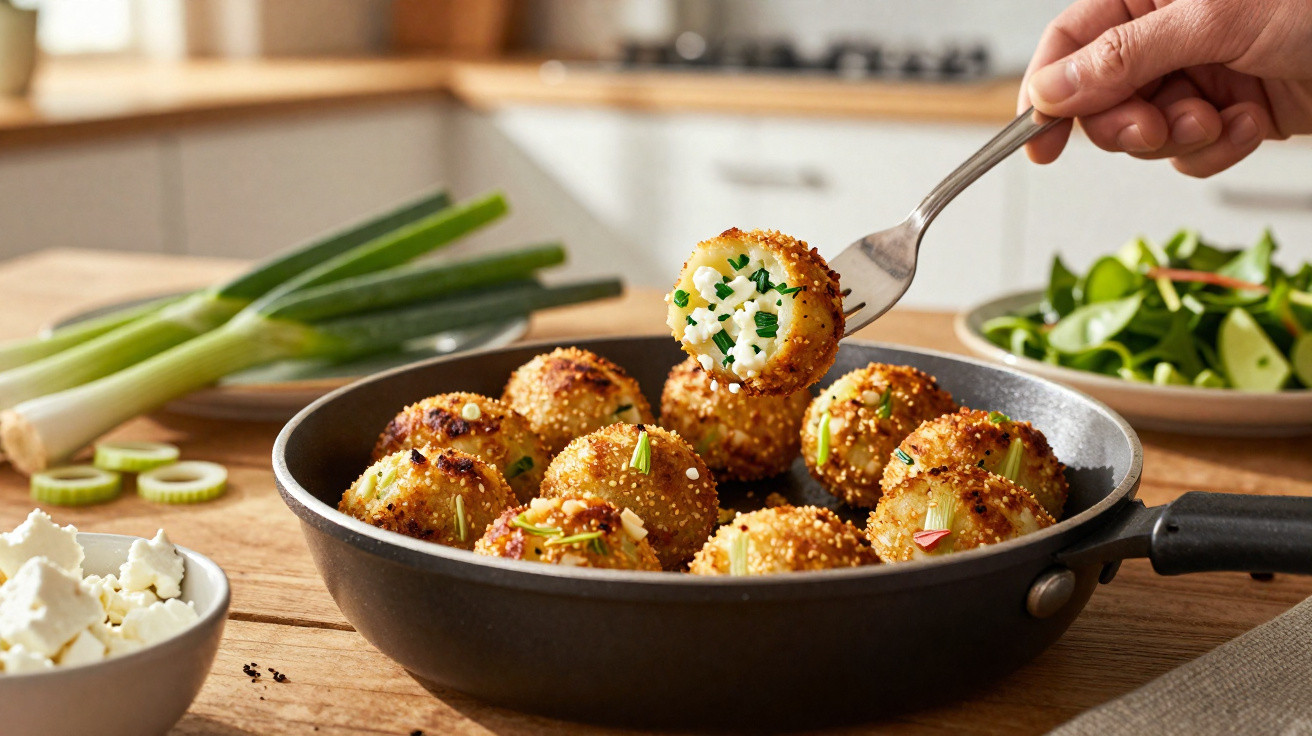
One man hated leeks – until his wife tried a new frying-pan recipe.
One bite was all it took, and he immediately wanted another helping.
Many households have one vegetable with a poor reputation. Leeks are often among them: “too strong”, “too boring” or “too bland”. This straightforward recipe for crispy leek-feta fritters made in a frying pan puts those preconceptions to rest. With just a handful of ingredients, it creates a hearty comfort-food dish that can win over even the biggest sceptics.
Why these leek-feta fritters are so popular
Rather than being hidden away as a side ingredient in a stew, leek takes centre stage here. Slowly cooking it in the frying pan makes the vegetable tender, mildly sweet and soft. Mixed with salty feta, a little flour and an egg, it becomes a batter that fries into golden, crisp fritters.
Softly braised leek, creamy feta and a crisp crust: this combination tastes surprisingly sophisticated and takes only a few minutes in the frying pan.
This recipe works well for a speedy evening meal, an easy working-from-home lunch or a vegetarian option for brunch. The stated quantities make around 10 to 12 small fritters, which is ideal for two to three people.
Ingredients for crispy leek-feta fritters
This frying-pan dish requires only a quick check of the cupboard. You will need:
- 3 leeks
- 150 g feta
- 2 tablespoons flour (wheat flour or an alternative flour)
- 1 egg
- Salt
- Pepper
- Herbs of your choice, such as parsley, chives, thyme or mint
You will also need a little fat for frying, such as butter, neutral vegetable oil or olive oil. A lemon yoghurt dip, a light honey-mustard sauce or simply a crisp side salad all make suitable accompaniments.
Preparing leek properly: from whole vegetable to a flavoursome base
The first stage determines whether the leek tastes delicate and mild later on or remains rather sharp. Thorough cleaning and slow cooking are essential.
How to make leek tender and aromatic
- Remove the outer leaves if they are particularly tough.
- Cut the leeks lengthways and wash them carefully under running water so that no grit remains.
- Slice the leeks into very thin rings or half-rings. The finer they are cut, the better the texture of the fritters will be.
Next, cook the leek in the frying pan.
Heat a little fat in a large frying pan and sweat the leek slowly over a medium heat. It should soften without taking on colour. This develops gentle, subtly sweet flavours. Season with salt, pepper and herbs, then allow it to cool briefly.
The leek should not fry, but rather “melt” – this removes its sharpness and leaves it pleasantly mild.
The quick batter: ready for the frying pan in minutes
While the leek cools, prepare the remaining mixture. Roughly mash the feta in a bowl with a fork. It is fine to leave a few chunks of cheese, as these create small salty highlights in the fritters later.
Add the cooled leek to the feta, then mix in the egg and flour thoroughly. The mixture should be moist but hold its shape. If it appears too runny, add another tablespoon of flour. If it seems too dry, a small splash of water or a spoonful of yoghurt can help.
The batter should be firm enough to scoop into small portions and shape into flat fritters without spreading out.
Tips for the ideal consistency
- Too soft: work in a little more flour.
- Too firm: add a small amount of liquid, such as water, milk or yoghurt.
- Very wet leek: allow it to cool slightly before mixing and pour off any excess liquid.
Golden and crisp: frying leek-feta fritters in the pan
For an even golden colour, use a well-heated frying pan with enough fat. Keep the heat at medium: if it is too high, the fritters will burn on the outside before setting in the middle; if it is too low, they will absorb fat instead of browning properly.
- Preheat the frying pan and add a generous amount of fat.
- Scoop portions of the mixture into the pan with a tablespoon and press them down lightly.
- Fry each side for around 4 minutes, until golden brown and crisp.
- Place the cooked fritters on kitchen paper so that excess fat can drain away.
Four minutes per side are enough to create a lovely crust, while the centre stays juicy and the feta melts slightly.
Using several frying pans at once will speed things up. The cooked fritters can be kept warm in the oven at a low temperature without becoming soft.
Serving ideas to complete the flavour
Leek-feta fritters are delicious on their own, but a suitable dip turns them into a little highlight on the plate. Three combinations that work particularly well are:
- Lemony yoghurt dip: Mix natural yoghurt with lemon juice, a little zest, salt, pepper and fresh herbs.
- Honey-mustard sauce: Stir mustard together with honey, a dash of vinegar and oil for a bold sweet-and-sharp sauce.
- Crisp side salad: Mixed leaf salad with strips of carrot or cucumber adds freshness and texture.
For a more substantial meal, serve the fritters with baked potatoes, tomato salad or toasted bread. Anyone who enjoys a savoury brunch can add a fried egg and some avocado.
Variations: from herbs to gluten-free
The basic mixture is easy to adapt, turning one simple recipe into a flexible framework for different preferences.
| Variation | Extra ingredients / change |
|---|---|
| Fresh herbs | Use plenty of parsley, chives or dill, perhaps with a little lemon zest |
| Mediterranean | Combine feta with mint, thyme or oregano |
| Autumnal | Add a few chopped walnuts or hazelnuts to the batter |
| Spiced | Stir in a little curry powder or ground cumin |
| Gluten-free | Replace wheat flour with rice flour, chickpea flour or a gluten-free flour blend |
The cheese can be varied too. If feta is not to your taste, use mild goat’s cheese, grated Alpine-style cheese or a mixture instead. The important thing is that the cheese contributes flavour and a little salt to the mixture.
Storing and reheating: keeping the fritters crisp
Leftovers are easy to plan for. Store the leek fritters in an airtight container in the fridge, where they will keep well for two days. To keep them for longer, freeze them: first freeze them separately on a board, then transfer them to a bag so they do not stick together.
When reheating, it is worth returning to the frying pan or oven. A brief spell in a hot pan restores the crust. They also reheat well in a fan oven at around 180 °C for a few minutes. The microwave tends to make them soft, so they lose the appeal of their crisp coating.
Why leek is such an interesting ingredient in the kitchen
Leek is often overshadowed by onions and garlic, although it belongs to the same family. Its long green stems have a finer, gentler sharpness that turns into a light sweetness during cooking. That is exactly what makes it ideal for people who find onions too strong.
Beyond the fritter recipe described here, leek works well in quiches, pasta dishes, soups and potato gratin. When sliced into strips and briefly fried, it also makes a good topping for pizza or a filling for wraps.
Practical kitchen tips for leek and feta
People who do not cook with leeks often encounter two issues: cleaning them and using up leftovers. As leeks are grown in sandy soil, earth often collects between their layers. Cutting them lengthways before washing solves this reliably. Then drain the leek well so that water does not end up in the frying pan later.
For feta, choose a block rather than a ready-crumbled product. It usually has a better texture, and the cheese does not dry out as quickly. Leftovers can be preserved in a jar with a little olive oil, herbs and garlic, creating a flavoursome cheese for salads, bread or the next batch of leek-feta fritters.

















Comments
No comments yet. Be the first to comment!
Leave a Comment