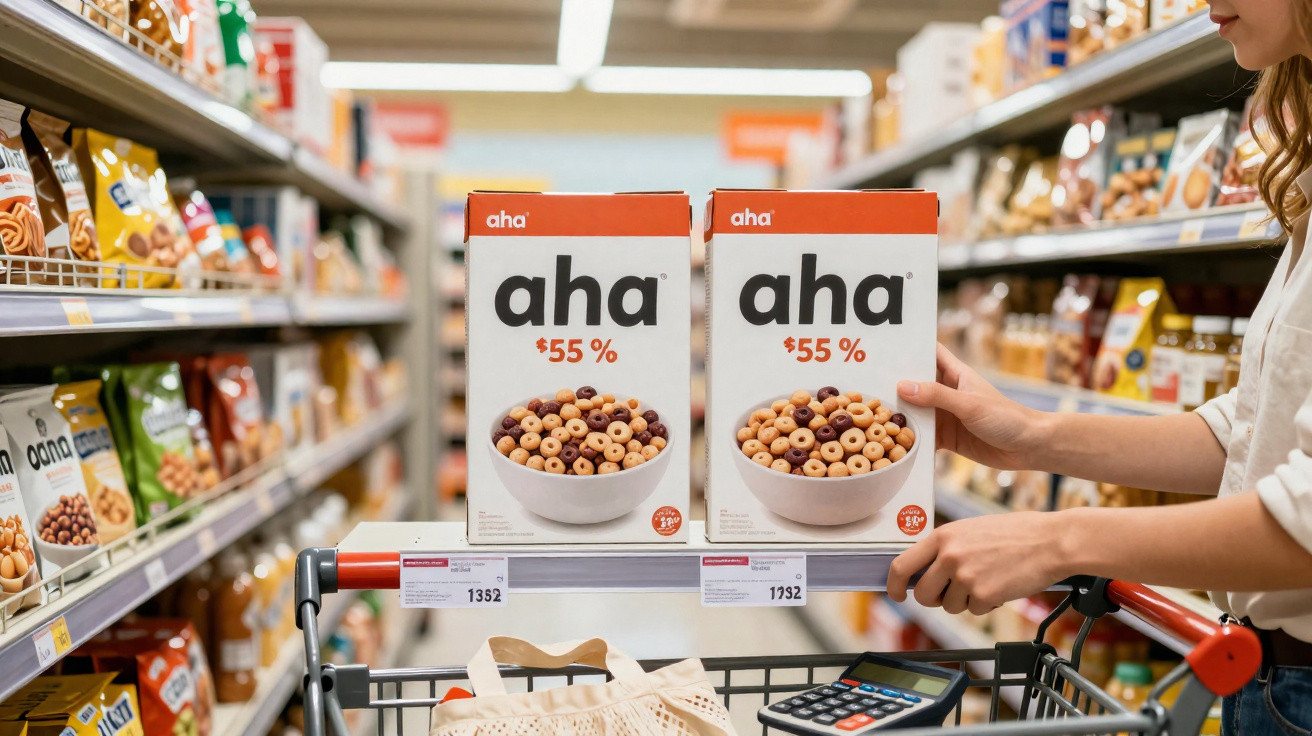
The pack looks the same, the brand has not changed, yet something in your trolley no longer adds up compared with what you used to pay.
Regular shoppers are already noticing the pattern: packs discreetly get smaller, the amount charged at the till does not fall, and the sense of losing out increases each month. This phenomenon, which even prompted a new rule in France in 2024, is more than a straightforward price rise. It has a name, is a deliberate strategy, hits household budgets directly and is drawing growing attention from governments and consumers worldwide.
What shrinkflation really means
Shrinkflation is the English term behind the French word “réduflation”. The principle is straightforward: the amount of product in a pack is reduced while the price stays the same or even increases. You still pay the same amount but take less home.
Shrinkflation is a hidden form of inflation: the price per kilogram, litre or item rises, even when the prominent price label appears largely unchanged.
This can be done in several ways:
- A biscuit packet contains fewer pieces, while its packaging design remains almost identical.
- A yoghurt pot loses a few grams, but the shelf price looks much the same.
- Washing powder comes in a lighter box, even though it takes up the same apparent space on the shelf.
A distracted shopper may compare only the final price rather than the price per kilogram or litre, and therefore miss the change. That is precisely where the strategy becomes effective.
Why brands use shrinkflation
Companies mainly point to rising costs: more expensive raw materials, energy, transport and labour. Rather than putting up prices openly, some choose to alter the quantity instead.
From a marketing perspective, the approach is understandable. A sharp price increase is noticeable and may drive customers away. A pack that becomes slightly smaller, however, is easier to overlook in everyday shopping.
Shrinkflation keeps a product within the same apparent price range, but moves the real increase into the unit price, hidden in the smaller print on the label.
The issue is transparency. Many shoppers feel misled, especially when the packaging is designed specifically to conceal the alteration: the same colours, similar shapes, and little or no clear notice of the new weight.
What France’s 2024 law changed in supermarkets
In France, pressure from consumer groups and the impact of inflation prompted government action. A new set of rules took effect on 1 July 2024 to shed light on this type of practice.
Which retailers are covered by the new rules
The rules chiefly apply to large physical food shops with a floor area of more than 400 m², namely:
- Supermarkets
- Hypermarkets
They cover both food and non-food goods, provided they are pre-packed and sold in a fixed quantity: a 1 kg bag of rice, a 90 g bar of soap or a cereal box with a stated weight, for instance.
The following are excluded:
- Products sold loose
- Variable-weight goods, such as deli items sold at the counter, freshly cut meat or rotisserie meals
- Distance sales, including e-commerce and click-and-collect services
What supermarkets must show customers
Where the quantity falls while the price per kilogram, litre or unit rises, the shop has a clear duty to provide a prominent notice.
In these situations, a visible display near the product must state:
| Required information | Details |
|---|---|
| Previous quantity | The amount previously contained in the pack, by weight, volume or number of items |
| New quantity | The amount now included |
| Change in unit price | How the price per kilogram, litre or unit of measurement has changed |
| Duration of the information | The notice must remain in place for two months |
For two months, consumers are entitled to see, close to the shelf, that a product has become proportionately more expensive because its pack has shrunk.
Enforcement is handled by the DGCCRF, France’s economic consumer-protection authority. In the event of non-compliance, fines can reach €3,000 for individuals and €15,000 for companies, and the penalty may be made public, which can damage a brand’s image.
How consumers can protect themselves from shrinkflation
Even where legislation exists, vigilance remains your main tool. A few habits make it easier to spot when something does not add up:
- Always compare the price per kilogram or litre, rather than just the overall price of the pack.
- Remember or photograph the weights of products you buy regularly.
- Be wary of “new” packaging with strong visual appeal but little clear information about its revised weight.
- Switch between brands and different pack sizes to identify which offers the best genuine value.
In practice, two products with the same final price can have substantial differences in their price per unit of measurement. The smaller label, usually placed just below the main price, contains exactly the figure that most people rarely check closely.
Shrinkflation, inflation and price perception
Shrinkflation also operates on a psychological level. When wages do not keep pace with inflation, shoppers become more sensitive to any direct increase on the price label. Companies therefore try to soften the visual shock by changing the quantity.
For many people, it feels as though the monthly budget is “leaking” for no clear reason. The trolley seems less full, the fridge empties more quickly, yet the amounts paid remain high. The feeling of losing control over the cost of living becomes stronger.
By splitting price increases into discreet changes in weight and volume, shrinkflation spreads inflation in small doses that are difficult to notice but add up by the end of the month.
Practical example: the month-end impact of shrinkflation
Imagine a breakfast cereal that cost £12 for a 400 g pack. Its price per kilogram was £30. The brand decides to reduce the pack to 350 g while keeping the price at £12.
- Before: 400 g for £12 → £30/kg.
- After: 350 g for £12 → approximately £34.28/kg.
On the large label, the price remains “£12”. Nothing appears outrageous. In reality, though, the cereal has become more than 14% more expensive per kilogram. Apply the same calculation to coffee, washing powder, yoghurt, biscuits, pre-packed deli meats and other regular purchases, and the monthly impact becomes much clearer.
Other terms worth knowing
Alongside shrinkflation, other concepts linked to pricing and product practices have also become more common.
- Stretchflation: a situation in which the price rises but quality declines. The recipe changes, more costly ingredients are replaced with cheaper alternatives, while the shelf price continues to increase.
- Skimpflation: a reduction in services or customer support while the price remains unchanged. Examples include fewer shop staff or cuts to added services.
These strategies can occur together: a sweet product with less weight, cheaper ingredients and a higher overall price. The label still sells convenience, tradition or a “new formula”, while the change goes unnoticed amid information overload.
Risks, limits and what may happen next
For brands, the risk is that public trust is eroded. Once consumers spot a pattern of shrinkflation, they may switch manufacturer, turn to supermarket own-label products or buy less from that category.
Governments, meanwhile, face the challenge of balancing economic freedom with consumer protection. Measures such as France’s 2024 law do not ban shrinkflation, but seek to curb its “invisible” aspect by requiring notices that make the effective price increase more obvious.
For people who shop every month, carefully checking prices per kilogram and litre, comparing old and new weights, and following news about laws and enforcement is becoming almost a new household skill. It does not solve inflation, but it reduces the unpleasant sense of surprise when paying for groceries.

















Comments
No comments yet. Be the first to comment!
Leave a Comment