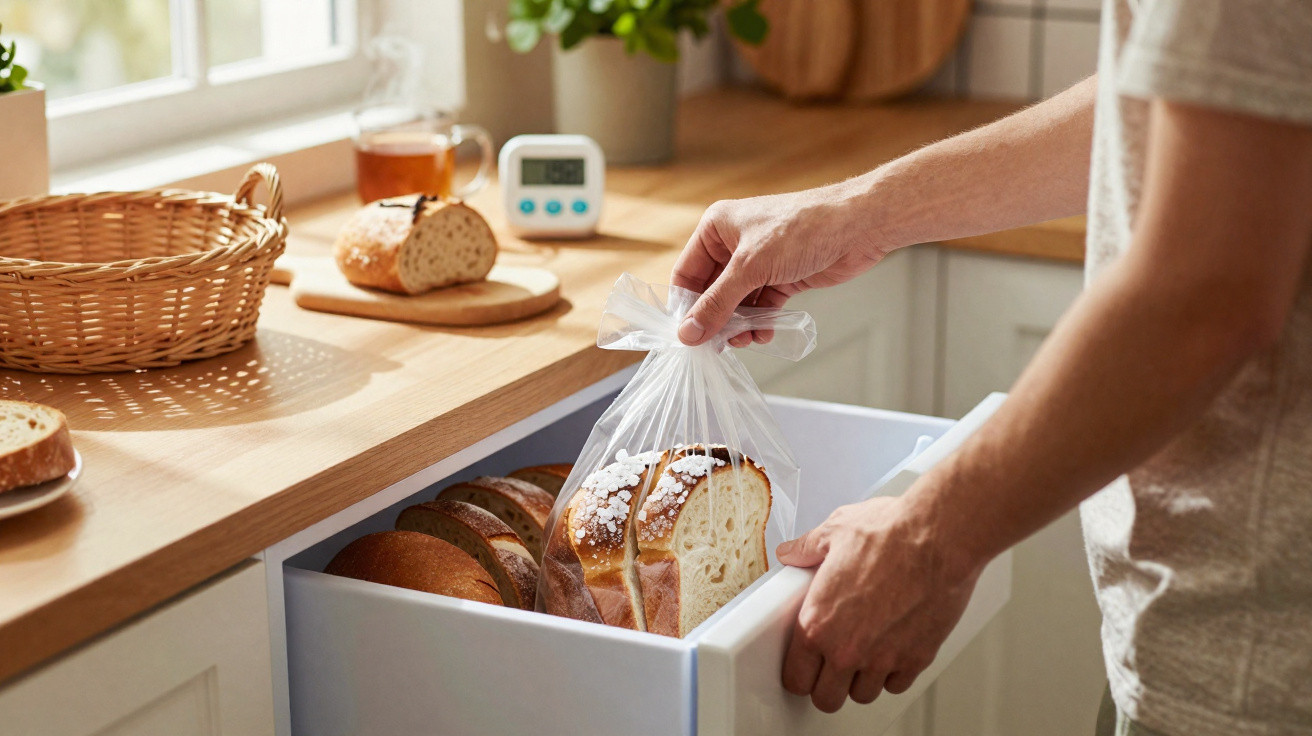
In almost every kitchen, leftover bread eventually ends up in the freezer. It is clearly a practical way to prevent food waste. But how beneficial is that bread for your body afterwards, and what hygiene risks are often overlooked?
Why we freeze bread – and what a loaf contains
Bread primarily provides complex carbohydrates in the form of starch, alongside fibre, B vitamins and minerals such as magnesium. Anyone who does not rely solely on white bread, but also chooses wholemeal or mixed-grain bread, can get a substantial mix of nutrients from just a few slices.
Some heat-sensitive vitamins are already lost during baking. This happens in the bakery or in your oven at home, rather than later in the freezer. If fresh bread is frozen promptly once it has cooled, most of its remaining vitamins and minerals are retained.
“The freezer mainly halts the ageing process of bread – it does not destroy its nutrients.”
The nutritional value therefore depends much more on the type of bread selected and the baking temperature than on freezing itself.
Frozen bread and hygiene: when germs get an opportunity
The more problematic aspect begins when bread is left uncovered for a long time or placed in the freezer in unclean packaging. Low temperatures slow down bacteria and mould, but they do not automatically kill them. Instead, they effectively become dormant.
Common kitchen risk factors include:
- bread left sliced on the table for hours before freezing
- bags that are not airtight, allowing moisture and freezer odours to enter
- slow defrosting in a warm kitchen, where the surface has already warmed up while the centre remains frozen
In these conditions, germs can multiply rapidly again while the bread defrosts. One particularly unpleasant type of spoilage is known as rope spoilage: the bread develops strings, feels “slimy” and smells unusual. At that point, it must be thrown away.
“If bread has strings, spots or a musty smell, it must not be eaten – whether it is fresh, frozen or defrosted.”
How freezing affects starch, fullness and blood sugar
It becomes particularly interesting when looking at what happens to starch inside the bread. Starch consists of chains of sugars that the body would usually break down into glucose relatively quickly. This is precisely why white bread can raise blood sugar rapidly.
As bread cools and is then frozen, part of its starch changes. It becomes what is known as “resistant starch”. This does not pass entirely through the small intestine, instead reaching the large intestine in part, where it behaves more like fibre.
A small study involving adults found that:
- fresh white bread caused a marked rise in blood sugar
- frozen and subsequently defrosted bread led to a smaller increase
- bread that was frozen, defrosted and then toasted reduced the blood sugar peak slightly further
Although these differences were measurable, they do not turn white bread into a miracle diet food. Anyone aiming to manage their blood sugar benefits from adjusting several factors at once:
- Bread type: choose wholemeal bread rather than bread made only with white flour
- Meal composition: toppings high in fat and protein slow the rise in blood sugar
- Preparation: cooling, freezing and toasting slightly increase the proportion of resistant starch
“Frozen and then toasted bread may make blood sugar rise a little more slowly – but it is no substitute for a balanced diet.”
How to freeze bread properly
With a few straightforward rules, the freezer becomes more than an emergency solution and turns into a useful everyday tool. Timing and packaging are what matter most.
The right time
Bread should only go into the freezer once it has cooled completely. Otherwise, condensation forms inside the bag, encouraging mould and freezer burn.
- ideally, freeze it on the day you buy or bake it
- allow it to cool to room temperature first
- do not wait until it has become stale and hard before freezing it
Portioning and packaging
Dividing bread into practical portions from the start saves hassle later and, above all, avoids the temptation to refreeze bread that has already defrosted.
- slice the bread or cut it into smaller pieces
- place it in freezer bags or containers that seal as airtight as possible
- write down the date so you can keep track of storage time
For home use, one to two months of storage is generally sufficient. After that, the main issue is not safety but flavour and texture. The crumb becomes dry, while the crust turns soft and slightly chewy.
Defrosting without a germ trap – the safe approach
Most mistakes happen during defrosting. Bread should not be left for hours on a warm radiator. Depending on your schedule, three safer options are available:
- In the fridge: especially hygienic, although it takes longer; suitable for vulnerable people, such as pregnant women or older adults.
- At room temperature: remove the bread from its packaging, place it on a board or rack, and eat or reheat it within one to two hours.
- Straight into the oven or toaster: particularly useful for slices; use medium heat so that the crust becomes crisp without burning.
“Never freeze it again: once bread has defrosted, it should either go straight onto the plate or into the oven – but not back into the freezer.”
For maximum caution, defrost bread in the fridge and then briefly reheat it in the oven. This reduces the number of germs on the surface and noticeably improves the flavour.
Who may need to be careful with frozen bread
Healthy adults can generally eat bread that has been correctly frozen and defrosted without difficulty. However, more vulnerable groups should take extra care. These include:
- pregnant women
- older people
- people with weakened immune systems
They should preferably defrost bread in the fridge and heat it thoroughly again before eating. This lowers the risk of contracting an infection from germs in the food. Everyone should dispose of bread with visible mould without hesitation – cutting away a generous section is not enough.
Preventing waste and supporting health by freezing bread wisely
Planning bread use carefully can save money, reduce waste and help moderate blood sugar at the same time. Some practical everyday examples include:
- Families can buy larger loaves at weekends, portion and freeze them, rather than purchasing fresh bread every day that may go partly unused.
- People living alone can freeze half loaves or individual bread rolls, defrosting only the amount they will actually eat.
- People with diabetes can combine wholemeal bread, freezing and toasting to help keep blood sugar peaks within range – in consultation with their treating doctor.
There is another important point: the structural changes caused by freezing and reheating can make many types of bread feel more filling. Some people automatically eat more slowly because slices are crispier or have more bite, and this too can play a small role in weight management.
Anyone exploring the subject in more depth will soon come across terms such as “glycaemic index” and “resistant starch”. Both essentially concern how quickly carbohydrates enter the bloodstream. The more indigestible components bread contains – through whole grains, fibre and some resistant starch – the gentler the blood sugar response. This applies not only to bread, but also to cooked, cooled and reheated foods such as potatoes and rice.
A look inside the freezer ultimately shows that correctly frozen bread remains a nutritious staple food. Those who maintain clean kitchen habits, use sensible portions and do not leave defrosting to chance can turn the freezer from an emergency measure into a genuine ally against waste, with modest additional benefits for metabolism and blood sugar.

















Comments
No comments yet. Be the first to comment!
Leave a Comment