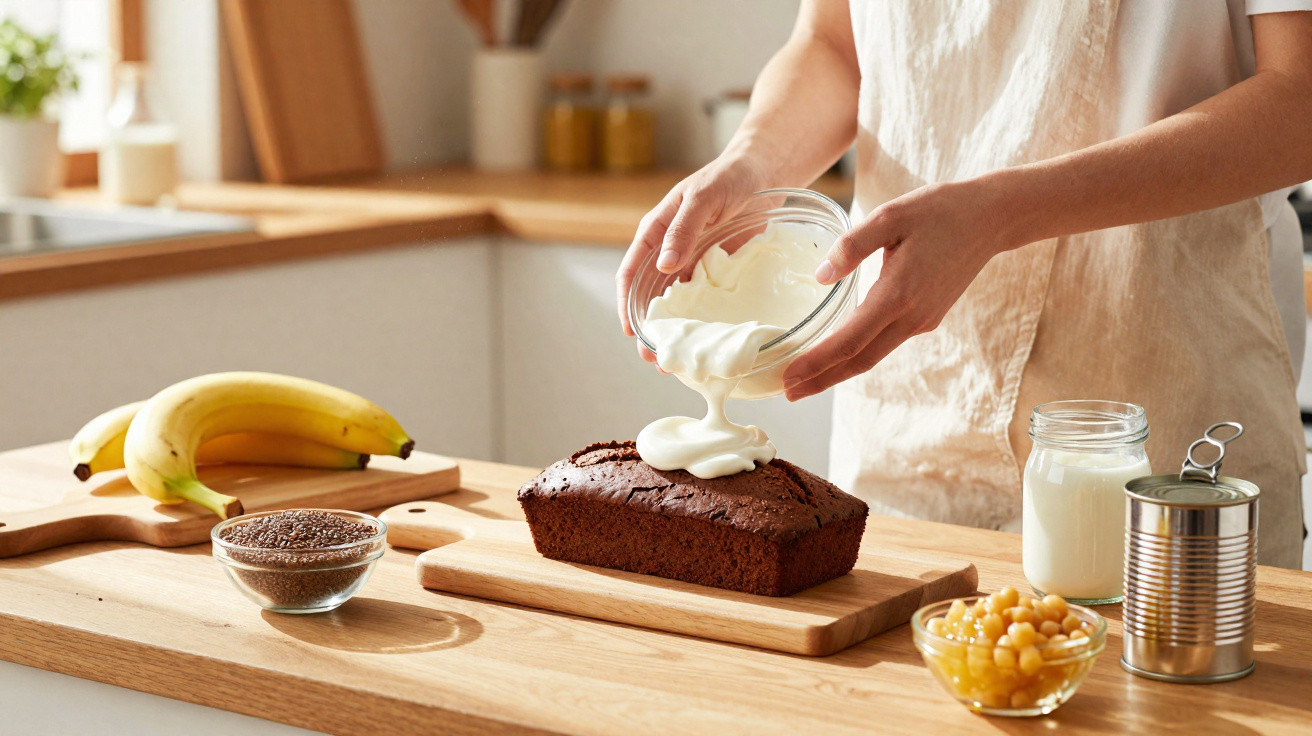
No need to skip using the oven: a few simple kitchen staples will still make baking possible.
Many home bakers panic when they discover that the eggs have run out. Yet almost any recipe can be salvaged once you understand what eggs actually do in batters, mixtures and bakes. Often, all it takes is reaching for apple purée, a banana or even chickpea liquid, and the baking tray can still go into the oven.
Why eggs seem so essential in recipes
Eggs appear in countless recipes, from sponge cakes and pancakes to quiches, biscuits and oven bakes. It is easy to assume that nothing works without them. The key, however, is to replace the egg’s function rather than trying to replicate the egg itself.
“Depending on the recipe, eggs provide three things: binding, lightness and moisture. There are clever alternatives for each of these jobs.”
In a sponge, for example, eggs introduce air into the mixture; in brownies, they chiefly add moisture; and in biscuits, they hold the ingredients together. Keeping this in mind makes it far easier to choose a suitable replacement – and leads to far fewer baking disasters.
Moist egg-free cakes: ingredients that save every baking tray
For loaf cakes, muffins and brownies, moisture and binding are the main priorities. This is exactly where a few everyday cupboard staples work particularly well.
Apple purée: the all-rounder for cake batters
Apple purée is already a cupboard staple in many kitchens. In baking recipes, it can reliably replace one egg.
- Use around 60 grams of apple purée for each egg
- Ideal for: loaf cakes, muffins, brownies and simple traybakes
- Provides: moisture and light binding
The apple flavour is usually barely noticeable in the finished cake, particularly when vanilla, cocoa or spices are included. For the most neutral result, choose unsweetened purée.
Banana: ideal for chocolate and nut recipes
A very ripe banana, preferably one with brown spots, works in a similar way to apple purée but contributes much more flavour.
- Allow roughly half a mashed banana per egg
- Works well in: chocolate cakes, nut cakes, banana bread and energy bars
- Has a binding and mildly raising effect
Banana can quickly become the dominant flavour, so it is best suited to recipes where that note is welcome. In lemon cakes or delicate vanilla cakes, it may be too pronounced.
Yoghurt: for light, airy batters
For a fluffy, relatively light cake, natural yoghurt can be used in place of egg – dairy or plant-based, depending on your diet.
As a rule of thumb, use about 60 grams of yoghurt per egg. It makes the batter particularly moist and gives it a fine, soft crumb. Combined with baking powder or bicarbonate of soda, it rises well while remaining stable.
Biscuits, waffles and more: keeping the mixture in shape
In biscuits and similar doughs, eggs mainly act as a glue. Their job is to stop the mixture spreading into one large flat layer on the baking tray.
Linseed or chia seeds as an “egg gel”
Once soaked in water, ground linseeds or chia seeds can create a structure similar to egg white.
“A ‘linseed egg’ consists of one tablespoon of ground linseeds and three tablespoons of water – leave it to swell briefly, and it is ready.”
After around 10 to 15 minutes, a thick gel forms that helps hold the mixture together. It works especially well in:
- Biscuits and oat biscuits
- Cereal bars
- Savoury vegetable or pulse patties
Chia seeds can be used in exactly the same way, although they create a slightly different texture. Both options also provide fibre and a small amount of plant protein.
Egg-free savoury cooking: quiche, oven bakes and frittata
Many people worry that a quiche or vegetable bake will fall apart without eggs. With the right alternative, however, the dish remains creamy and holds together well.
Tofu as a replacement for egg-based mixtures
Tofu can be blended with a little liquid and seasoning into a smooth mixture that develops a structured yet tender texture in the oven.
- Around 60 grams of tofu replaces one egg in a savoury mixture
- Blend until smooth with plant milk, cream or stock
- Season generously, for example with salt, pepper, turmeric, nutmeg and nutritional yeast
This mixture is suitable for:
- Vegetable quiche in a shortcrust pastry case
- Roasted vegetable bakes
- Vegan “frittata” made in a frying pan or in the oven
If you miss the characteristic egg flavour, add a little black salt (kala namak). Half a teaspoon in the full mixture is usually enough to create that aroma.
Foam like whipped egg white: the surprising power of aquafaba
Until a few years ago, whipped egg white was considered difficult to replace. Meringue, airy chocolate mousse and baked meringues all seemed impossible without fresh eggs. Then an ingredient emerged that many people had previously poured down the sink without a second thought: the cooking liquid from chickpeas.
What aquafaba is – and how it works
Aquafaba is the slightly thick liquid in which chickpeas have been cooked or stored, such as in tins or jars. It contains starches and proteins that can be whipped.
“Three tablespoons of aquafaba replace roughly one egg white in many recipes – and can be whipped into a stable foam.”
Using a hand mixer or food processor, aquafaba turns into a pale, glossy foam after a few minutes. Mixed with sugar, it can be baked into meringues or used to lighten chocolate desserts. Any flavour or potential pulse notes largely disappear when cocoa, vanilla or lemon are added.
Typical uses for aquafaba
- Chocolate mousse without animal ingredients
- Meringue toppings for cakes and tarts
- Macaroon-style biscuits
- Airy creams and desserts served in glasses
For reliable results, the chickpea liquid should be fairly thick. If it seems very watery, simmer it briefly to reduce it, then allow it to cool before whipping.
Practical guide: what can replace an egg in a recipe?
| Function of the egg | Suitable replacement | Amount per egg (guide) |
|---|---|---|
| Moisture, succulence | Apple purée, mashed banana, yoghurt | approx. 60 g apple purée or yoghurt, 1/2 banana |
| Binding in biscuits and patties | Linseed or chia gel | 1 tbsp seeds + 3 tbsp water |
| Savoury egg mixture (quiche, oven bake) | Blended tofu | approx. 60 g tofu |
| Foam, whipped egg white | Aquafaba | 3 tbsp liquid |
What to consider when adjusting a recipe
No replacement behaves exactly like a hen’s egg. When adapting a recipe, keep a few points in mind:
- Check the batter consistency: if it seems too stiff, add a little liquid; if it is very runny, add a little flour or starch.
- Keep an eye on the baking time: egg replacements can alter the cooking time slightly. Towards the end of baking, test with a skewer.
- Remember the flavour: banana, apple purée and strongly seasoned tofu affect the final taste. Adjust the seasoning accordingly.
When trying an egg replacement for the first time, it is particularly worthwhile making a smaller batch. This allows you to see how the mixture behaves without risking an entire baking tray if it does not turn out as expected.
Who benefits most from egg-free baking
These methods are not only useful for people who deliberately avoid animal products. Alternatives also help you stay flexible if you have allergies or intolerances, or simply because food prices are rising. Anyone who often bakes on impulse will benefit from keeping apple purée, linseeds or a tin of chickpeas in the cupboard, as they last far longer than fresh eggs.
Many bakers also report less waste thanks to these techniques: even if there is no egg available at the crucial moment, the recipe can usually still be rescued. With a little practice, these methods can produce new favourite versions that you later choose to make deliberately – even when the fridge is fully stocked again.

















Comments
No comments yet. Be the first to comment!
Leave a Comment