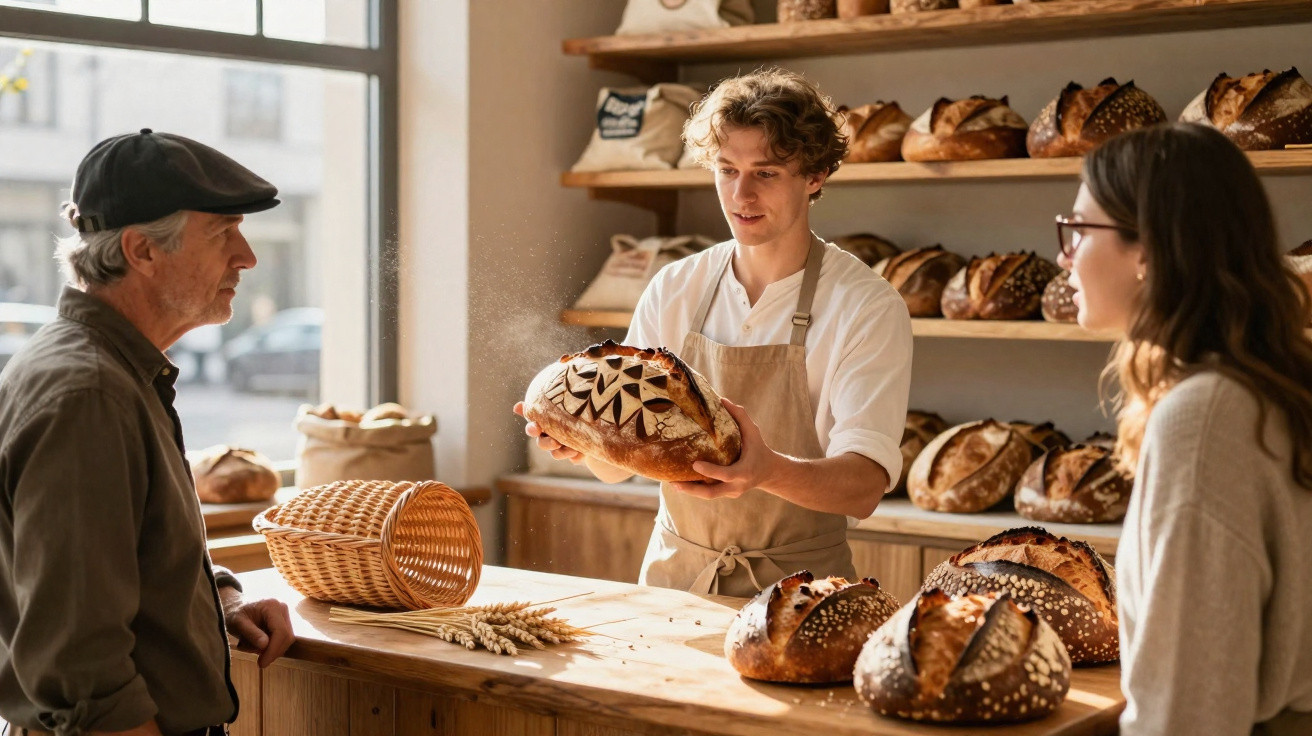
In a country where the crisp white baguette is almost a national emblem, removing it from the shelves can seem like a modest cultural rupture. Yet the decision to stop selling this familiar loaf is driven by solid factors: changing eating habits, steep energy bills, climate concerns and the growing popularity of breads made with lengthy fermentation and heritage grains.
Why French people are eating less bread
The change is already evident at the dining table. Taking home a baguette from the baker each day is no longer part of everyone’s routine. Official figures reveal the scale of the decline: after the Second World War, average consumption stood at about 700 grams per person each day. Today, it is only just under 100 grams.
That means many people no longer eat even half a baguette a day. Above all, changing diets are behind this trend: more ready meals, more food on the go, and fewer traditional evening meals of bread and cold cuts.
The daily baguette bought on the way home is losing its status as an essential purchase – particularly among younger people.
Representatives of the baking industry are already raising the alarm. Younger consumers in particular no longer visit their local bakery every day. Many now treat the traditional white baguette as something for the weekend, when visiting their parents: a nostalgic exception rather than an everyday habit.
Rise of the “neo-bakeries”: sourdough, organic flour and heritage grains
At the same time, a new kind of bakery is appearing on the streets of French towns and cities. These contemporary shops are built around terms such as “long fermentation”, “sourdough”, “organic flour” and “heritage grains”. Rather than standard white bread, their focus is on substantial loaves with robust crusts and dense crumb.
Typical features of these shops include:
- Using heritage grains such as emmer and einkorn
- Flour from organic farming
- Extended fermentation with natural sourdough
- Less emphasis on rapidly produced mass-market products
Some businesses take the approach even further by removing the classic baguette from their range altogether. In France, where the white baguette is recognised as intangible cultural heritage, this amounts to a small revolution behind the counter.
Rennes example: why one bakery relies entirely on large loaves
In Brittany, a bakery in Rennes has taken precisely this step. Operating under a modern name, its owners run something of a laboratory for a new way of thinking about bread – without the usual baguette in the basket.
Their case rests mainly on two arguments: energy use and nutritional value. Traditional baguettes require extremely high oven temperatures and are baked in numerous batches. That consumes electricity or gas and puts pressure on bakers’ margins.
Large loaves can finish baking in ovens as they cool down – saving energy and keeping costs more stable over the long term.
Instead of small baguettes, this bakery mainly puts hearty country loaves and wholemeal breads into the oven. They are denser, more filling and can remain on the shelf for longer without losing quality. At a time of rising energy prices, many fellow bakers see this as a way out of the escalating cost cycle.
Climate, shelf life and less waste
The owners also point to climate protection. Needing fewer baking cycles at exceptionally high temperatures reduces energy consumption – and therefore the bakery’s CO₂ emissions. Larger loaves are easier to plan for, often remain saleable for several days and are less likely to end up in the bin.
The limited period during which a traditional baguette is at its best is one of its drawbacks: after only a few hours, it begins to lose its crispness and flavour. If it remains unsold, food waste quickly follows, an issue now viewed critically in many bakeries.
Bakeries without baguettes: customer reactions range from shock to enthusiasm
Bakers are not only trying the “shop without a classic baguette” experiment in Brittany; some in the outskirts of Paris are doing so too. In a small town north of the capital, a bakery opened in 2024 that relies consistently on natural fermentation and deliberately leaves out standard white bread.
Many visitors are initially taken aback. People hoping to pick up a baguette quickly instead find attractive but unfamiliar large loaves. Some turn around and leave, while others ask for advice – then later return specifically for the new varieties.
Between habit and curiosity: customers are finding their way anew – and trying rye, wholemeal and sourdough breads.
The owners describe two clear groups: people who keenly miss the familiar shape, and customers who praise the flavour and longer-lasting freshness of the new breads. Many take home larger portions, slice them there and freeze some of the bread – buying behaviour more reminiscent of German bread culture.
The price question: is the new bread only for higher earners?
The price labels are unsurprising. A traditional baguette costs around one euro on average in France. Half a kilogram of speciality bread made with organic flour and long fermentation can easily cost five to seven euros.
On a purely practical basis, customers receive more weight and often greater satiety for their money. Even so, the price looks significantly higher at first glance, especially in neighbourhoods where people need to watch their spending closely.
| Product | Indicative price | Quantity |
|---|---|---|
| Classic baguette | approx. €1 | about 250 g |
| Speciality bread (sourdough, organic) | €5–7 | approx. 500 g |
Industry observers describe the customer base in this context as somewhat “elitist”: an urban middle-class audience that is nutrition-conscious and prepared to pay considerably more for artisan-produced bread. Many traditional rural bakeries therefore cannot, and do not want to, simply copy the model.
Is the iconic baguette under threat?
Despite the experiments with baguette-free shops, the industry does not expect this classic bread to disappear. Well-known bakers who have built hundreds of branches around the world regard the new concepts more as a niche aimed at a particular audience.
Their view is that the crisp baguette will remain a firm part of everyday culture, especially in smaller places and less affluent neighbourhoods, where tradition matters more than food trends. Anyone needing an inexpensive bread quickly for breakfast will still choose a baguette rather than a costly sourdough loaf.
The classic baguette is still regarded as the people’s bread – while speciality loaves serve a growing but limited segment.
Much therefore points towards a dual structure: modern shops centred on sourdough, organic ingredients and heritage grains on one side, and traditional bakeries meeting everyday demand on the other. Both worlds exist side by side, gently prompting one another to innovate.
Why this development is also interesting for Germany
For readers in German-speaking countries, some of this will feel familiar. In many cities, new bakeries have also opened in recent years, promoting long fermentation, natural sourdough, regional grains and hand-crafted production. At the same time, affordable chains selling standardised baguettes and bread rolls continue to hold their ground.
France demonstrates how far a country with a strong bread culture can move in this direction. If even tradition-minded French bakers remove the baguette from their range, it signals a deeper change: bread is once again being viewed more as a high-quality food, rather than merely a cheap filling accompaniment.
For consumers, this creates a new responsibility. Those wishing to waste less may buy less often but choose larger loaves, slice them and freeze part of the bread. Those who want to support regional farming and better-quality flour must be willing to invest a little more and make considered choices about what their household budget can accommodate.
Terms such as “long fermentation” and “natural sourdough” are not simply marketing language. Long proving means the dough rests for many hours, developing flavours rarely found in quickly made bread. Natural sourdough provides a lightly tangy taste, improves digestibility and keeps bread fresh for longer – an advantage especially for rye and wholemeal breads.
The French debate about the future of the iconic baguette makes one point clear: the question is not only “What shape is the bread?”, but above all “How was it made, how long does it remain edible, and how heavily does its production affect the climate and household budgets?”. It is at this intersection that the bread found on shelves in future will be decided – in Paris, Rennes, Berlin or Munich.

















Comments
No comments yet. Be the first to comment!
Leave a Comment