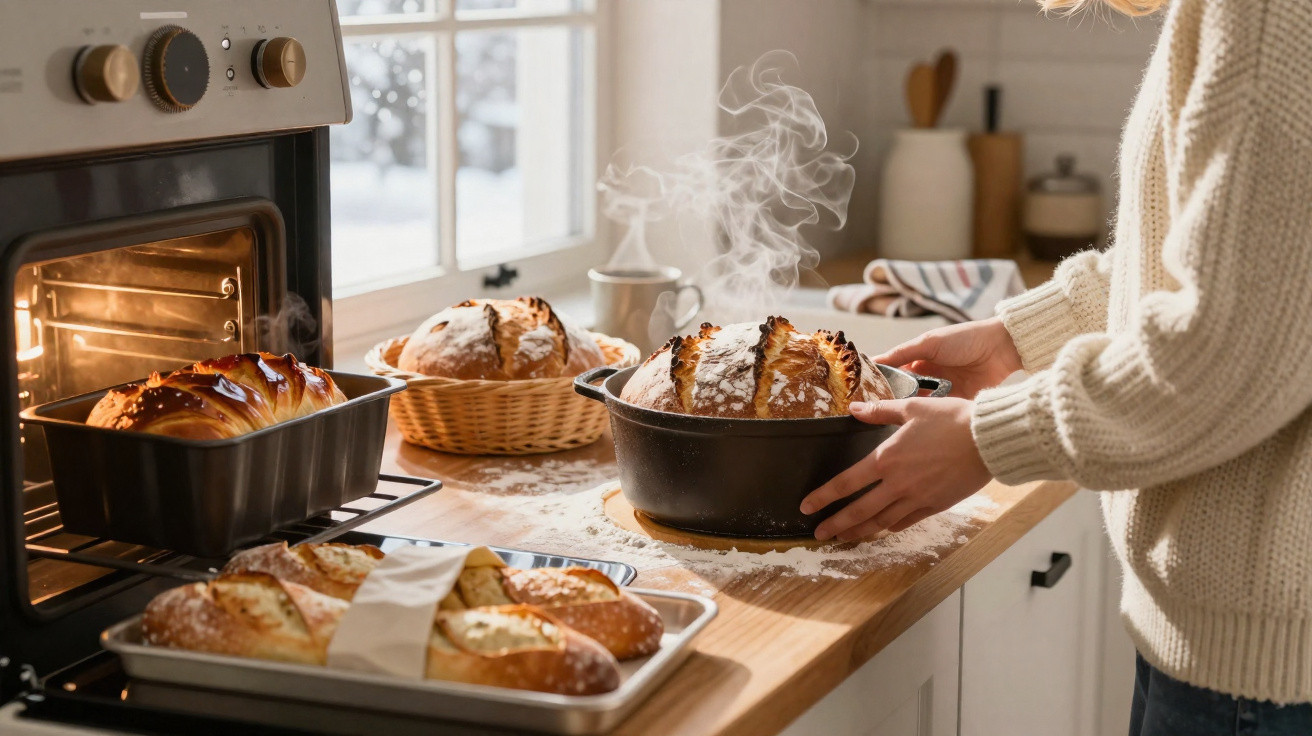
When it is freezing outdoors, the oven becomes your best friend: with a few clever tools, you can make bakery-quality bread and brioche at home.
The colder months call for warm lighting, thick socks and the scent of newly baked bread. This is when many people take up baking for the first time or rediscover a long-standing passion: crisp crusts, soft crumb and buttery winter brioche. Although it can seem like professional-level baking, it is remarkably straightforward with the right basic kit and a few useful techniques.
Why winter is the ideal season for bread and brioche
As the temperature drops, daily life naturally shifts towards the kitchen. The oven is used more often, central heating dries the air and appetites turn towards more substantial food. Fresh bread and light brioche fit the season perfectly: they do more than satisfy hunger, they also create a comforting feeling.
Few things create a cosy atmosphere as quickly as the aroma of freshly baked bread wafting from the kitchen through the home.
Yeasted doughs can also respond particularly well in winter, as people are more likely to keep them somewhere warm, allow them extra time and avoid trying to squeeze the process between work and evening plans. A slower rise produces deeper flavour, a better texture and a crust that audibly crackles when sliced.
The essentials: baking equipment that is genuinely worth having
There is good news for anyone intimidated by professional equipment: you do not need a bakery in the cellar to produce impressive bread. A small selection of useful tools will, however, make a noticeable difference to shape, flavour and everyday practicality.
- Proofing basket for flavourful loaves that hold their shape
- Sturdy brioche or Bundt cake tin
- Loaf tins for toast, mixed-grain bread and moist cakes
- Baguette tray for crisp long loaves
- Heavy cast-iron pot for pot bread
- Optional: bread maker for days when time is short
Proofing basket: a training ground for bread dough
An oval proofing basket, often made from rattan or wood pulp, acts like a quiet coach in the background for home bakers. It supports the shaped dough while the yeast or sourdough starter does its work.
What does it offer in practical terms?
- Dough rises upwards rather than spreading outwards.
- The surface dries very slightly, helping to create a better crust in the oven.
- Its characteristic grooves give bread its familiar artisan appearance.
- The structure remains stable, particularly with very soft doughs.
It is especially beneficial if you are trying sourdough or planning a particularly flavourful wheat or rye loaf. One important point: flour the proofing basket generously, otherwise the dough will stick. Many bakers use a blend of wheat flour with a little rice or rye flour, as this releases more easily.
Classic brioche tin: winter sweetness for long Sundays
Brioche is much more than simply “sweet bread”. Its generous butter, eggs and small amount of sugar create a dough that rises lightly in the oven and tastes wonderfully luxurious at the table. A fluted tin, similar to one used for a Bundt cake, distributes heat evenly and leaves an attractive pattern.
What a good brioche tin needs to do
- Have firm sides for an even distribution of heat
- Feature a smoothly finished rim where nothing catches
- Offer an inner surface that can be greased or floured easily
It is suitable not only for traditional Sunday brioche, but also for winter versions: orange brioche with zest through the crumb, chocolate brioche with chunky pieces, or a yeasted cake with raisins and almonds.
Loaf tin: from toast bread to savoury snacks
A simple non-stick loaf tin is a versatile cupboard essential. If you own one, you can get started with very little effort.
With a single loaf tin, many families can meet three needs at once: toast bread, sponge cake and savoury bread variations.
Typical uses include:
- Soft toast bread for sandwiches and French toast
- Light, airy milk loaves for children's breakfasts
- Savoury cheese and bacon breads for winter snacks
- Moist loaf cakes, such as lemon or marble cake
A quality coating prevents the frustration of a cake or loaf refusing to come out of the tin. Even beginners with no baking experience will almost always achieve a presentable result here, as the tin “guides” the dough in the right direction.
Baguette tray: crisp long loaves like those from the local bakery
Anyone who has tried baking baguettes directly on a standard baking tray will know the issue: the loaves spread or stick together. Special baguette trays with several channels and small perforations solve this neatly.
The holes allow heat to reach the dough evenly from all sides. This produces an especially crisp crust while the crumb remains soft inside. For the best result, baguettes need intense heat and plenty of steam, for example from a dish of water placed in the oven.
Cast-iron pot: the secret to professional-style crusts
Pot bread baked in a cast-iron pot is no longer merely a trend; it has become a kitchen staple for many people. The heavy lid traps the steam released by the dough during baking. This delays the formation of a firm crust, allowing the dough to expand fully before it sets.
| Benefit | Baking advantage |
|---|---|
| High thermal mass | Retains heat and promotes even browning |
| Lid | Creates a humid environment like that of a professional oven |
| Versatility | Can also be used for stews, braised dishes and winter ragouts |
If you want to buy only one “luxury” item, a cast-iron pot is usually the best choice: bread, pot roast, chilli and goulash can all be made in the same piece of cookware.
Professional set for ambitious home bakers
Once basic loaves in a tin become easy to make, many people want to take things further. Specialist professional loaf tins, often made from slightly thicker material, deliver particularly even results. They are well suited to larger quantities of toast bread, sandwich bread or long, buttery braided brioche.
Advantages of these sets include:
- Consistent shape and size, ideal for portioning and freezing
- Sturdy sides that resist warping at high temperatures
- The ability to bake several loaves at once, which is useful for families or batch baking
Bread maker: fresh bread without the stress
People with limited time in everyday life or irregular working hours often opt for a bread maker. Add water, flour, yeast, salt and, if desired, seeds or nuts; select a programme, press start and let the machine handle the rest.
Typical benefits of modern machines:
- Different programmes for white bread, wholemeal, brioche and pizza dough
- Timer function: prepare the dough and enjoy fresh bread at breakfast
- Consistent results, even while you get on with other tasks
For many households, a bread maker does not replace the oven but complements it. It can work quietly in the background during the week, while weekends allow time for more elaborate loaves made in a cast-iron pot or proofing basket.
Practical tips for successful winter baking
When outdoor temperatures are low, managing the dough is particularly important. The kitchen and ingredients should not be ice-cold. Many people leave dough to rise in a switched-off oven that has been gently warmed, or on a warm rather than hot radiator.
Flour quality is another factor that is often underestimated. Those who switch from inexpensive supermarket flour to strong bread flour from a mill shop or organic retailer generally notice the difference in volume and texture straight away.
From kitchen to comfort zone
Baking bread in winter is more than a hobby. It gives the day a rhythm, brings everyone to the table and creates moments when conversation happens naturally. Children can knead dough, shape rolls, or scatter crumble and seeds over the top. Adults can experiment with long proving times, blends of spelt, wheat and rye, and different seeds.
Anyone who has watched homemade dough rise in a proofing basket, split dramatically in a cast-iron pot and then cool with a gentle crackle soon understands: this is about more than filling up. It is a small ritual that makes the cold season feel warmer and turns the kitchen into a personal, fragrant baking space.

















Comments
No comments yet. Be the first to comment!
Leave a Comment