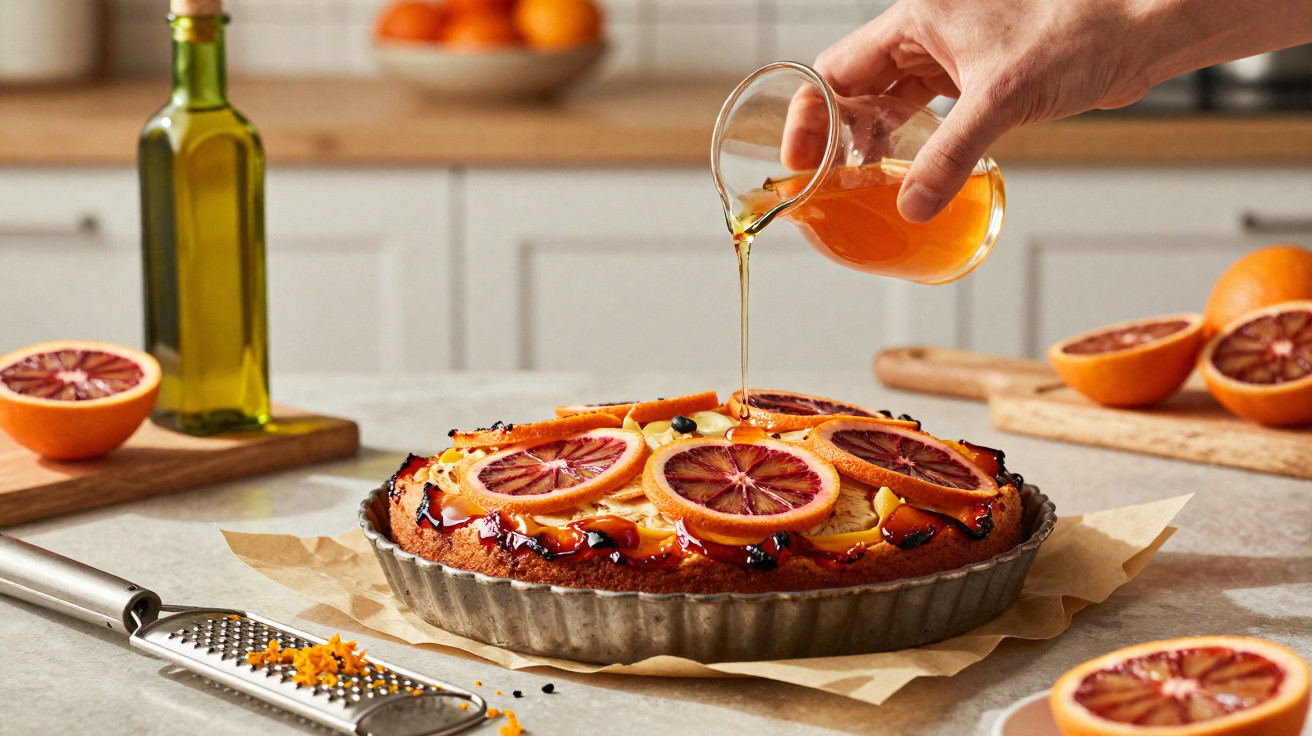
A plain-looking sponge, a golden crust and an intense citrus fragrance – yet it contains a fat that hardly anyone uses for baking.
Many home bakers instinctively reach for a block of butter as soon as they pick up a whisk. Butter is often treated as indispensable in cakes in particular. But a seasonal cake made with blood oranges and almonds proves that another ingredient can not only take its place, but make the flavour more interesting: olive oil. Anyone willing to bake with it is rewarded with a moist, vibrant cake that barely dries out even the following day.
Why olive oil works so well in cake
Using olive oil instead of butter may initially sound like a compromise or something from diet baking. In reality, the opposite is true: it produces a soft, moist batter that stays that way after cooling. Unlike butter, which firms up when cold and can make a cake slightly denser, olive oil remains supple.
“A well-balanced olive-oil batter stays tender, elastic and aromatic – even after two days beneath a cake cover.”
This quality comes into its own when baking with blood oranges. The fruit contributes both acidity and juice to the mixture. Olive oil absorbs this, rounds out the flavours and lends the cake structure. The crumb is open and moist, without becoming soggy.
The pairing of olive oil and blood orange
Blood oranges are fruity, sometimes faintly berry-like and, depending on the variety, distinctly fresh and tart. Paired with a mild olive oil, they create an appealing flavour combination:
- blood orange provides freshness and fruitiness
- olive oil adds softness and a gentle, mellow note
- almonds in the batter enhance the sense of richness and sweetness
Choosing the oil is important. Those who opt for a powerful, grassy variety may encounter a familiar problem: the cake tastes “of oil” and feels heavy. A mild, fruity olive oil, by contrast, blends in quietly and amplifies the other flavours rather than overwhelming them.
The foundation: simple ingredients, considerable impact
The ingredient list may seem unremarkable, but it reveals how carefully the cake is constructed. This is not about showmanship; it is about texture and flavour.
| Component | Role in the cake |
|---|---|
| Self-raising flour | provides structure and ensures an even rise |
| Ground almonds | make the crumb moist and velvety |
| Icing sugar | combines smoothly with the dry ingredients, with no crystals |
| Olive oil | replaces butter and keeps the cake soft |
| Eggs | bind, lighten and add colour |
| Blood orange juice and zest | deliver freshness, fragrance and colour |
| Bicarbonate of soda | provides extra lift and reacts with the acidity of the oranges |
There is also a syrup made with water, blood orange juice, sugar and sliced oranges. It soaks into the baked cake and leaves the surface glossy, almost lacquered.
How to make a moist blood orange cake with olive oil
Preparation has two stages: first make the syrup with candied orange slices, then prepare the batter itself. The method is straightforward, but a few small details matter.
Step 1: Orange slices in syrup
Begin by putting the water, blood orange juice and sugar into a saucepan. Once the mixture is gently simmering, add the sliced oranges. Leave them over a low heat until they are soft and nearly translucent. The sugar and acidity meld together, while the slices turn glossy yet retain their shape.
Keep the syrup and slices together in the saucepan until the cake is ready, so none of their flavour is lost.
Step 2: The butter-free batter
For the second stage, combine the dry ingredients: self-raising flour, almonds, icing sugar and bicarbonate of soda. The mixture should be fine and free from lumps.
Next, add the eggs, olive oil, blood orange juice and zest. The key point is not to mix for too long. The batter only needs to become smooth, not fluffy. Overworking it makes the cake tough and removes its airiness.
“The batter needs no force, only a brief, decisive stir – that is how it stays light.”
Then transfer everything to a round tin, place it in the oven at a moderate temperature and bake until the top is golden brown and a knife comes out clean.
Step 3: Syrup and finishing touches
Once baked, let the cake rest briefly in its tin before turning it out. Arrange the soft orange slices over the surface, then pour over some of the warm syrup. The crust absorbs part of it while remaining firm. This creates the contrast of a crisp exterior and a soft centre.
How to bake with olive oil successfully every time
People baking with olive oil for the first time are often wary of its flavour. A few rules reduce the risk to virtually zero.
- Choose a mild variety: Avoid intensely bitter oil; look instead for one described as “mild and fruity” or made from ripe olives.
- Stick to the quantity: Do not add extra by instinct, or the flavour balance may tip.
- Do not overmix the batter: Stir only until no traces of flour remain visible.
- Watch the temperature: Excessive heat dries out the cake and makes the crust hard.
Together with the almonds and self-raising flour, this produces a crumb that hardly sheds any crumbs, yet does not feel heavy to eat and has a subtle sheen. Using syrup also lets you control the moistness deliberately: the more syrup you add, the more pronounced the effect.
Variations with other citrus fruits
Although blood oranges have only a short season, the principle can easily be adapted to other citrus fruits. The character changes, while the basic idea remains the same.
- Lemon: a noticeably fresher, brighter flavour, ideal with extra sugar in the syrup.
- Mandarin or clementine: softer, rounder and gently nostalgic – reminiscent of children’s birthday parties.
- Grapefruit: a delicate bitterness that feels more grown-up and works well after a hearty meal.
Those who wish can combine varieties: use a little lemon in the batter, orange in the syrup and a hint of zest over the top. This makes it easy to adapt the cake to the rest of the menu or the mood.
Serving, storing and avoiding pitfalls
The cake is best served at room temperature. That is when the olive oil, almonds and citrus notes are most fully expressed. Served slightly warm, it is almost pudding-soft – ideal with a spoonful of Greek yoghurt or lightly whipped cream. Vanilla or yoghurt ice cream turns it into a dessert that feels almost restaurant-worthy.
Another benefit is that the oil keeps the cake moist for several days when it is well covered. The syrup gives added protection against drying out. For freezing, it is best to cut the cake into portions and pack them airtight. Once defrosted, they retain a surprising amount of moisture.
The risk of an overpowering olive-oil flavour remains. Overdo it and the cake can leave a heavy, soapy impression on the palate. It is therefore worth tasting a drop of the oil on its own before baking. If it tastes balanced, mild and lightly fruity, it will suit the cake. If it is bitter and very strong, it belongs on a salad rather than in the batter.
The nutritional aspect is also worth considering: olive oil does not contain fewer calories than butter, but it does provide more unsaturated fats. That does not automatically affect body weight, but it may make more difference to the heart and blood vessels. For anyone who bakes regularly, this swap can be a small step towards a more considered diet without sacrificing enjoyment.
Anyone who has cut into a blood orange cake with olive oil soon notices the difference: the crumb has a slight shine, the slices hold together and no greasy film gathers on the plate. The first bite shows just how little butter truly needs to be treated as sacred in cake. The next experiment with lemon or mandarin is usually only a matter of time.

















Comments
No comments yet. Be the first to comment!
Leave a Comment