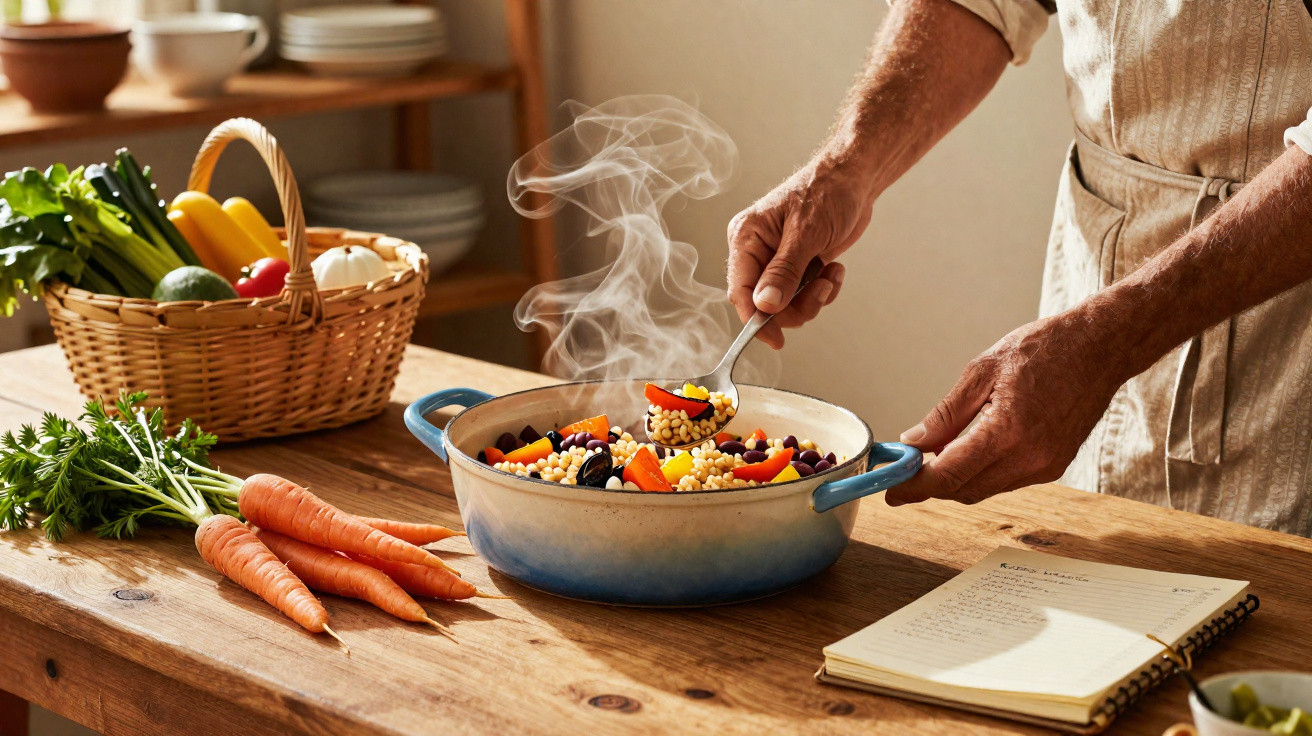
The first time it appeared in my feed, I scrolled straight past it. It was a brown, rustic countryside casserole, as unassuming as a wet Tuesday, wedged between fluorescent poke bowls and meticulously styled avocado toast. But then it appeared again. And again. The same straightforward dish showed up on different kitchen tables, collecting thousands of likes and comments such as “My grandma used to make this!” and “Fed a family of five for under $6.”
I tapped on it, and suddenly I was looking into somebody else’s farmhouse kitchen: steamed-up windows, a battered enamel baking dish on a wooden table, and children already waiting for another serving. There was no foam or micro-herbs, only proper food, baked until its surface was golden and crisp.
This once-forgotten countryside casserole is returning, and that is no coincidence.
The comeback of the ‘poor man’s’ casserole
At heart, this viral meal is almost ridiculously uncomplicated: potatoes, beans or lentils, a handful of modest vegetables and a little cheese, all baked gently over time. There are no expensive cuts of meat or obscure imported spices that will languish at the back of the cupboard - only store-cupboard ingredients you are likely to have already.
Food creators have given it plenty of labels, including “farmhouse bake”, “peasant casserole” and “Nana’s oven dinner”, yet the formula remains consistent. It is layered, starchy and warming, and somehow more reassuring than another salad requiring 12 ingredients. The old countryside casserole has quietly spread across TikTok, Instagram Reels and YouTube Shorts.
It is the sort of dinner you end up eating with a spoon while standing at the hob, even after you are already full.
Keep scrolling and the same picture repeats itself. A student in a cramped London flat boils potatoes in a scuffed saucepan. A single father in Ohio folds a tin of white beans into caramelised onions. A retired couple in rural France scatter leftover cheese across yesterday’s vegetables. Each is making their own version of the casserole, filming with one hand and stirring with the other.
A viral clip by a young mum in Wisconsin drew more than 3 million views over one weekend. Her caption was blunt and truthful: “Grocery prices are a joke. This feeds 6 for $5.29.” Its comments quickly filled with suggestions: replace the beans, add carrots, leave out the cheese, use stock, add spinach. No one was debating authenticity; everyone was simply trying to make their money go further while still eating properly.
The recipe feels less like social media content than a small, quiet act of survival.
There is a reason for its resurgence beyond simple nostalgia. Food now needs to meet three requirements at once: it must be inexpensive, substantial and reasonably good for you. This casserole seems to achieve all three almost unintentionally. Potatoes and other root vegetables provide slow-release carbohydrates, beans and lentils bring fibre and protein, and oven-baking develops deep flavour without the need to fry everything in oil.
Nutritionists note that meals based on whole ingredients and pulses can fit surprisingly well with Mediterranean-style eating. There are no ultra-processed sauce sachets or sugary glazes, just familiar basics. Keep the cheese restrained and make the vegetables plentiful, and the result is filling and nutrient-dense while remaining relatively light.
Let’s be realistic: no one cooks like a wellness influencer every day.
How to make a countryside casserole
Treat the basic recipe as a framework rather than a strict rule. Begin with a starchy foundation: finely sliced potatoes, sweet potatoes, or even leftover rice or barley pressed into the base of a greased ovenproof dish. This is your starting point.
Add protein and fibre above it in the form of rinsed tinned beans, cooked lentils or a combination of both. If you eat meat, a small amount of chopped bacon or sausage can add flavour, though it is entirely optional. Then scatter over onions, carrots, leeks or any vegetables in the fridge drawer that are beginning to look a little tired.
Add a straightforward liquid: vegetable stock, thinned cream, or milk whisked with garlic, salt and pepper. Finish with a light sprinkling of grated cheese or breadcrumbs. Bake at 180–190°C until the top is golden and the edges are bubbling. When it smells too good to ignore, it’s usually done.
The main danger is making it too complicated. You do not need five cheeses, three meats or a béchamel that takes half an hour. Pile in too many rich additions and you lose the affordable, lighter weekday appeal that made the dish special in the first place.
Another frequent error is adding too much liquid. That is how a casserole turns into soup hidden beneath a cheese topping. Before it goes into the oven, the ingredients should look only lightly moistened, as the potatoes and beans will absorb more moisture while cooking. If your first attempt comes out slightly dry or overly wet, though, that is fine.
We have all experienced that point when a supposedly “simple” online recipe becomes a minor domestic crisis.
A dietitian I spoke with, who is quietly fond of this trend, said something that stayed with me.
“People think healthy eating means endless fresh salads and expensive superfoods,” she said. “But these old countryside recipes were built on vegetables, beans, and portion-controlled animal products. They were frugal first, and accidentally balanced.”
To make it affordable, filling and unexpectedly healthy, rely on a few simple substitutions:
- Make beans or lentils the primary protein, using meat only to add flavour.
- Keep the cheese topping light and bulk out the dish with extra vegetables.
- Use stock and milk rather than double cream for a lighter result.
- Bake one large dish, then divide the leftovers into portions for lunches or freezer meals.
- Season generously with herbs, garlic and onions, reducing the need for extra fat and salt.
Why this “poor” countryside casserole now feels luxurious
There is something quietly radical about seeing this casserole in 2024 social media feeds. While algorithms encourage glossy, aspirational plates, this dish brings us back to chipped crockery and reheated leftovers. Its message is simple: you can eat well without making your kitchen look like a production studio.
The real trend is not only the recipe but also the feeling surrounding it. People film the untidiness, the cluttered worktops and children pinching tastes from the dish. Rather than asking, “What brand of olive oil?”, commenters say, “I made this with whatever I had and it actually worked.” There is relief in being able to admit that.
It reminds us that comfort does not always arrive in polished packaging or with the opening of a fashionable restaurant. Sometimes it is a bubbling dish on a Wednesday evening, made from tins, scraps and a little time, feeding everyone until they can relax a little. The following day, it often tastes even better eaten cold from the fridge.
| Key point | Detail | Value for the reader |
|---|---|---|
| Cheap, filling base | Made with potatoes, beans, lentils and leftover vegetables | Lowers food costs while still providing a complete meal |
| Healthier than it appears | Rich in fibre and plant protein, with few ultra-processed additions | Helps support fullness and energy without restrictive dieting |
| Flexible template | Ingredients can be swapped according to what is available at home | Cuts food waste and kitchen stress while fitting real-life schedules |

















Comments
No comments yet. Be the first to comment!
Leave a Comment