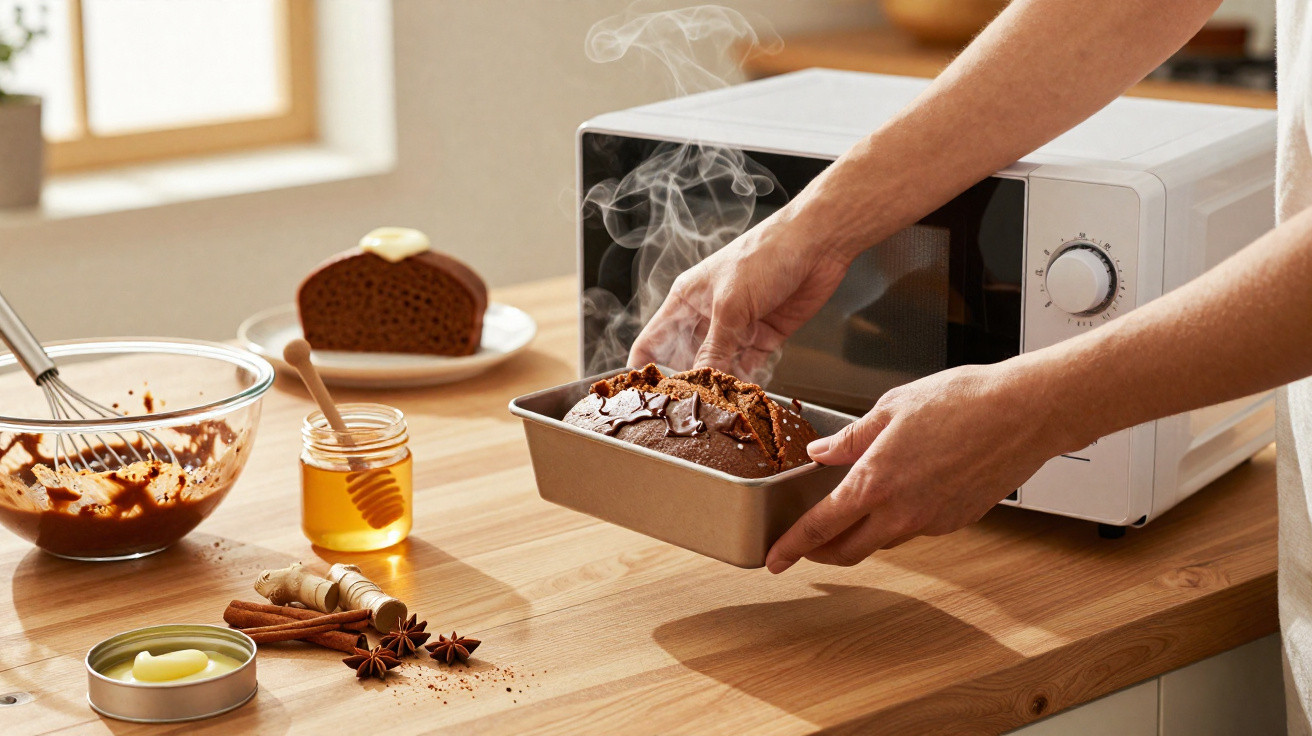
Some puddings evoke winter markets and childhood kitchens, yet take less time to make than a trip to the supermarket.
French pastry chef Christophe Felder has devised a gingerbread that preserves the classic warmth and spice but cooks in mere minutes in a microwave. There is no need for resting, complicated syrups or a professional oven: just a bowl, a whisk and a little insight into how the Alsatian chef modernised a centuries-old recipe.
The chef who changed the gingerbread rulebook
In France, Christophe Felder is recognised not so much as a television figure, but as the skilled technician behind the successes of countless home bakers. As former head pastry chef at Paris's Hôtel de Crillon, he earned his standing by making classic pâtisserie achievable in everyday kitchens.
His quick gingerbread is an ideal illustration. A traditional dense, honey-rich loaf is usually left for hours, and sometimes days, so its flavours can develop. Felder turns that convention around. With a microwave and carefully chosen chemistry, he retains a soft, fragrant crumb while reducing the hands-on work to only a few minutes.
Felder’s twist: a honey‑based batter, boosted with bicarbonate of soda, that rises fast and stays remarkably tender after just five minutes of cooking.
Christophe Felder's 10-minute gingerbread recipe
The recipe starts with an unexpectedly simple collection of ingredients. There are no specialist tools or hard-to-find items, only thoughtfully selected cupboard basics.
Essential ingredients and their purpose
- Flour (150 g) – provides the loaf's structure.
- Brown sugar (80 g) – contributes moisture and a subtle caramel flavour.
- Runny honey (60 g) – supplies sweetness and acidity, both important for the rise.
- Milk (100 ml) – loosens the batter and helps create a tender texture.
- Neutral-flavoured oil (40 ml) – ensures the crumb stays soft rather than crumbly.
- Egg (1) – binds the mixture and helps the loaf rise.
- Baking powder (1 sachet) – the usual raising agent for quick cakes.
- Gingerbread spice mix (2 tsp) – generally cinnamon, ginger, nutmeg, clove and star anise.
- Bicarbonate of soda (a pinch) – the small but strategic addition that makes the difference.
The bicarbonate reacts with the natural acidity of honey, releasing carbon dioxide and giving the batter an almost instant lift.
How to get from bowl to plate
This method depends more on speed and temperature management than technical skill. Begin by putting every liquid ingredient into a bowl: the milk, honey, oil and egg. Whisk vigorously for 30 seconds to introduce air and form a light emulsion.
Next, add the dry ingredients straight into the bowl: sifted flour, brown sugar, baking powder, spices and the all-important pinch of bicarbonate. Whisk only until the mixture is smooth. Excessive mixing develops the flour's gluten, which could produce a chewy texture instead of one that melts in the mouth.
Pour the batter into a silicone loaf tin, which is a purposeful choice. Silicone copes well with microwave heat and makes turning out the loaf almost effortless. Tap the tin lightly on the worktop to remove air bubbles, then level the top with the back of a spoon so that it cooks evenly.
Why a microwave suits gingerbread
Microwave baking remains divisive among keen bakers and is often considered an excessive shortcut. Here, however, it is fundamental to the recipe.
A short blast rather than a lengthy bake
Set the filled tin in the middle of the microwave and cook it at 800 watts for five minutes. Over this brief cooking period, the mixture warms from within, quickly activating the raising agents and making the loaf nearly double in volume.
Microwave heat drives moisture into the heart of the cake rather than drying the crust, which is one reason the crumb stays surprisingly soft.
Felder's method specifies that the microwave door must remain shut throughout the entire five minutes. Stopping the cooking can cause the loaf to sink while it is rising. At the end, insert a knife into the middle: it should emerge clean, or with only a few crumbs attached. If the centre is still not cooked, return the loaf to the microwave in 30-second bursts.
Leave the gingerbread in its tin for two minutes before turning it out onto a cooling rack. Serve it warm for a more pudding-like texture, or cool it fully if you want tidier slices.
Pastry-kitchen tips and variations
For anyone without a silicone mould, Felder suggests using a well‑oiled large mug, reducing the cooking time to about 3 minutes 30 seconds.
Once you have learned the basic approach, the recipe lends itself to modest adjustments. Making your own spice blend with equal quantities of ground cinnamon, ginger, nutmeg, clove and star anise lets you tailor the strength of the flavour. If you prefer a deeper profile, increase the clove and star anise slightly; for brighter, fresher spice, favour ginger and cinnamon.
Felder also advises mixing in approximately 50 g of chopped dark chocolate or candied orange peel immediately before cooking. Either ingredient softens slightly in the microwave, leaving bursts of flavour throughout the otherwise even crumb.
Keep the loaf in an airtight container and it will last for around three days. Many bakers feel that the spices become more pronounced on day two, as their aromas continue spreading through the cake.
Ideal accompaniments for quick gingerbread
This speedy loaf works equally well for breakfast, afternoon tea or an impromptu dessert when unexpected guests arrive.
| Occasion | Suggested pairing | Why it works |
|---|---|---|
| Breakfast | Generous slices with salted butter and black tea | The salted butter balances the sweetness, while smoky tea reflects the spices. |
| Afternoon snack | Central American coffee | Its gentle acidity and restrained bitterness allow the honey flavours to remain prominent. |
| Family treat | Rich hot chocolate | A comforting pairing that is particularly popular with children. |
| Evening dessert | Warm almond milk with cardamom | Its nutty sweetness and soft spice suit the loaf without overwhelming it. |
| Festive table | Light, gently sparkling cider | Its freshness cuts through the cake's density and refreshes the palate. |
An ancient cake brought sharply up to date
Gingerbread has a long history. Honey cakes perfumed with spices were documented in ancient China more than 2,000 years ago. Trade routes and the Crusades brought them to Europe, where medieval monasteries intrigued by unfamiliar spices adopted them.
By the 18th century, Dijon had established itself as France's unofficial gingerbread capital, while areas including Alsace created their own spiced loaves and biscuits. Felder's rapid version belongs to that Alsatian lineage, but applies modern equipment and food science to suit contemporary lives.
Several of the spices do more than add flavour. Ginger and anise, for example, have been linked with digestive comfort in traditional practice and in some scientific research. This helps explain why parts of eastern France often serve a piece of spiced cake with tea after a rich winter meal.
Adapting the method for UK and US kitchens
Cooks outside France can make the recipe with very few changes. There is no need for strong bread flour: ordinary plain flour is sufficient. Choose a neutral oil, such as sunflower, grapeseed or rapeseed oil, to avoid introducing flavours that could conflict with the spice mixture.
US blends labelled “pumpkin spice” and UK “mixed spice” are close to the classic gingerbread profile, so either can be used as it is. For a more continental flavour, add star anise or a drop or two of an aniseed liqueur for a distinctly French note.
Serving sizes are easily adapted. Divide the batter among several small silicone moulds to make individual portions. Reduce the cooking time in this instance and check them often, since smaller cakes set more rapidly.
From comfort cake to creative foundation
As well as serving it unadorned, use this rapid gingerbread instead of sponge cake or brioche in other puddings. Thin pieces toasted in a dry frying pan make a crisp base for poached pears or roasted plums. Alternatively, crumble the loaf and combine it with a little melted butter to create a biscuit-style layer in the base of a cheesecake tin.
For festive meals, some Alsatian households offer slices of gingerbread topped with foie gras or blue cheese. Its sweet, spiced character offsets the savoury richness in a pairing that may be unexpected to British and American tastes, but is firmly rooted in regional tradition.
A single, microwave‑cooked loaf ends up serving multiple roles: weekday snack, dinner‑party base and quiet nod to a recipe that has travelled across centuries and continents.

















Comments
No comments yet. Be the first to comment!
Leave a Comment