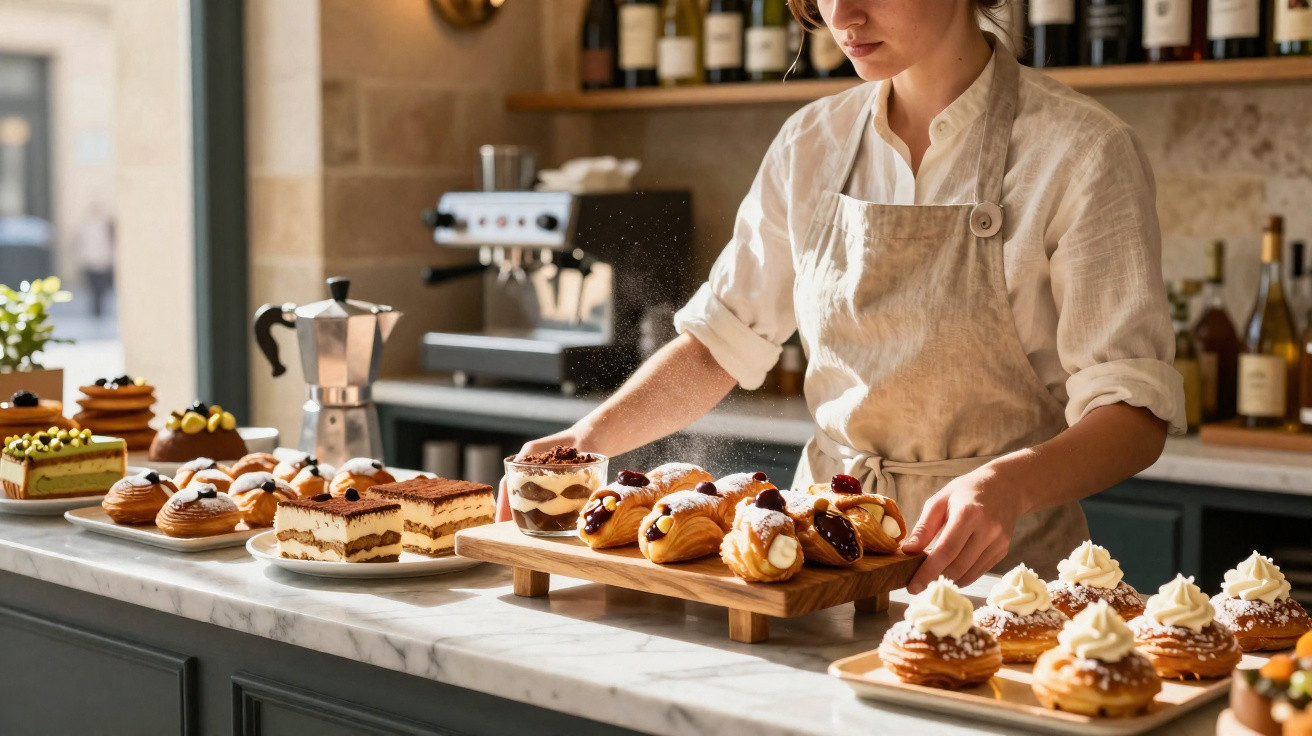
In a tucked-away side street in Bordeaux, the aroma of coffee and freshly baked brioche now carries an unmistakably southern, sunlit feel.
Rather than another version of tiramisu served in a glass, a recently opened patisserie is discreetly changing local expectations of how Italian desserts should look and taste.
An Italian patisserie offering more than tiramisu
Ask people in France or the UK to name an Italian dessert and they will probably say tiramisu. On a particularly knowledgeable day, they might add panna cotta. However, pastry displays from Naples to Palermo are filled with countless regional cakes, fried specialities and cream-filled buns that seldom make it across the border.
Caterina, a new Italian patisserie in central Bordeaux, has set out to address that absence. It is run by Ciro, a baker from Naples, alongside his partner Clémentine. They had both grown tired of seeing the same situation in France: Italian savoury food was widely available, while its sweet traditions were largely represented by a single famous dessert.
At Caterina, the aim is simple: show what Italians actually eat for dessert, not just what tourists recognise on menus.
When Ciro first moved to France, he found that nearly every “Italian-style” dessert menu centred on one recipe. He therefore chose to make the pastries he missed from home, creating a display that resembles a Neapolitan pastry bar rather than a brasserie’s Italian-themed section.
Bordeaux’s understated love affair with Italian food
The opening has come at an apt moment. French diners already embrace Italian savoury staples, with pasta, pizza, risotto and arancini now regular weekday choices. Tiramisu is also among the most widely shared desserts online, repeatedly reinvented with pistachio, berries and chocolate-hazelnut spreads.
Videos showing sponge fingers being dipped in coffee and mascarpone cream being whipped reliably attract attention on TikTok and Instagram. Plenty of home bakers can assemble a tiramisu well before they have learnt to work with choux pastry.
Caterina builds on this enthusiasm while taking it in a different direction. Instead of dismissing the cult dessert, the patisserie presents it as an accessible starting point before encouraging customers to explore less familiar classics from across Italy.
Caterina’s Italian patisserie menu
Tiramisu is, naturally, available - its absence would be surprising. Yet it serves as a foundation rather than the whole idea. Alongside the traditional coffee version is a more aromatic variation combining pistachio and orange blossom, a pairing well known in southern Italy.
The display counter mixes recognizable favourites like tiramisu with bolder choices: filled buns, fried choux rings and crisp pastry rolls.
The signature pastries
- Classic coffee tiramisu – coffee-soaked ladyfingers layered with mascarpone cream and finished with a dusting of cocoa.
- Pistachio and orange blossom tiramisu – a greener, nuttier and more floral alternative to the original, created for devoted pistachio fans.
- Pistachio brioche – tender enriched dough filled generously with pistachio cream, intended for eating with coffee or during a leisurely breakfast.
- Cannolo siciliano – crisp fried pastry tubes containing cream and topped with pistachios imported from Sicily.
- Maritozzo – a Roman-style cream-filled bun, offered here in pistachio or hazelnut flavours.
- Zeppola with lemon and cherry – a choux pastry ring topped or filled with custard, with citrus and fruit providing balance.
Together, these sweets offer a quick tour of Italian geography. Maritozzi belong to Rome and Lazio, cannoli are associated with Sicily, and zeppole come from southern Italy. Presented side by side, they allow visitors to taste their way around the peninsula without leaving Bordeaux.
Coffee and drinks in the Neapolitan style
Caterina’s drinks menu also draws on its Italian heritage. Coffee is made in a moka pot, the traditional stovetop brewer kept by many Italian households for daily coffee. It produces a drink that is stronger and slightly fuller-bodied than filter coffee, served in small cups rather than oversized mugs.
Chilled Italian teas are available for anyone seeking a lighter option. Most offerings can be eaten at the counter or taken away for an afternoon pause in one of Bordeaux’s nearby squares.
Handmade production that customers recognise
A central part of Caterina’s appeal is its claim that every item is made by hand on site. Doughs are prepared in-house, creams are cooked in the back kitchen, and imported garnishes are chosen carefully. This is particularly true of Sicilian pistachios, which can offer a more intense taste as well as a higher cost.
The patisserie emphasises “100% homemade” production, a detail that regulars pick up on and mention in online reviews.
Initial reactions have been very positive. The shop has already gained a Google average close to 4.9 out of 5, and reviews regularly mention freshness, warm service and the pleasure of finding an alternative to the familiar selection of French classics.
In Bordeaux, a city already known for canelés and traditional bakeries, such a focused concept is distinctive. It proposes another kind of ritual: a short espresso with a small pastry rather than a lengthy restaurant dessert at the end of a meal.
Why Italian desserts remained overlooked
One explanation for tiramisu’s dominance is that Italian sweets are often found in cafés and pastry bars, rather than fine-dining restaurants. They are eaten in the middle of the morning with coffee on the way to work, or enjoyed as a late-afternoon indulgence.
British and French tourists taking short city breaks often concentrate on pizza by the slice or gelato. A bakery display piled high with maritozzi and zeppole is more likely to be photographed than cleared out.
Tiramisu is also easy to assemble from ingredients that travel well: eggs, sugar, coffee, mascarpone and biscuits. Fried pastries such as cannoli, by comparison, can become soft when filled too early, making them more difficult to standardise and export.
| Dessert | Typical region | When Italians usually eat it |
|---|---|---|
| Tiramisu | Veneto (popular nationwide) | Restaurant dessert or home gatherings |
| Maritozzo | Rome and Lazio | Breakfast or late-morning snack |
| Cannolo siciliano | Sicily | Festive occasions, weekend treats |
| Zeppola | Southern Italy | Religious feasts, street stalls, pastry bars |
What a visit to Caterina can look like
A first visit commonly begins with some hesitation. Many customers choose the item they recognise - a tidy square of tiramisu behind the counter - then ask the question the staff hear every day: “What’s that one?”
That question creates an opportunity for recommendations. Someone who enjoys pistachio spread may be directed towards the generously filled pistachio brioche. Those who prefer a crunchy bite might be encouraged to try a cannolo, which contrasts a crisp, shattering shell with a smooth filling.
For people accustomed to French pâtisserie, Italian pastries can seem a little less polished. Their glazes may be more rustic, their fillings more plentiful and their forms slightly irregular. That imperfect look is part of their appeal, closely reflecting the way people genuinely bake and eat at home.
Bringing Italian pastry habits into your own kitchen
For readers who live far from Bordeaux, Caterina suggests several ideas that can be recreated at home without professional equipment or specialist skills.
- Rethink timing: serve a small pastry with your morning coffee instead of keeping sweet foods solely for the evening.
- Play with pistachio: stir pistachio paste through whipped cream to give a basic sponge cake or trifle a different twist.
- Use proper coffee in tiramisu: a moka pot or a strong espresso shot adds bitterness and structure.
- Keep fried items crisp: when making cannoli, fill the shells immediately before serving to retain their crunch.
There are some compromises to consider as well. Fried dough and rich creams are unquestionably indulgent. Alternating heavier pastries with lighter fruit-based choices, such as citrus, berries or poached pears, can provide a more balanced week - particularly if Italian-style snacks begin to feature at breakfast and in the afternoon.
For anyone with a nut allergy, the current enthusiasm for pistachio may present difficulties. Nuts are central to many Italian recipes, providing both texture and flavour. Reading labels, speaking directly with bakers or keeping nut-heavy pastries for special occasions can lower the chance of accidental exposure while leaving room for enjoyment.
Even for those who never visit Bordeaux, the arrival of a fully Italian patisserie in the city conveys a wider message: Italian dessert culture extends far beyond one coffee-soaked classic. Tiramisu may have opened the door, but places such as Caterina reveal how much lies beyond it.

















Comments
No comments yet. Be the first to comment!
Leave a Comment