That lingering old food smell in a microwave usually starts when splashes of fat and food residue build up, then get reheated again and again. Even after a quick wipe, the odour can hang around because some grime bonds to the inner lining and settles into tiny crevices that everyday cleaning barely reaches. It becomes most noticeable the moment you switch the appliance on, when yesterday’s aroma blends into whatever you’re heating now.
Why does the old food smell stay in the microwave?
Wiping the microwave with a damp cloth can lift the most visible mess, but it rarely gets into every internal corner. Grease spatters often leave an almost invisible film that repeatedly heats up and releases smells each time the microwave is used.
As days go by, this layer can adhere to the ceiling, side walls and the door rim, as well as narrow internal gaps. In heavy-use places such as offices and shared kitchens, the inside also seldom dries properly, which encourages odours to build up until they seem to "live" in the microwave.
How does the lemon steam method work in the microwave?
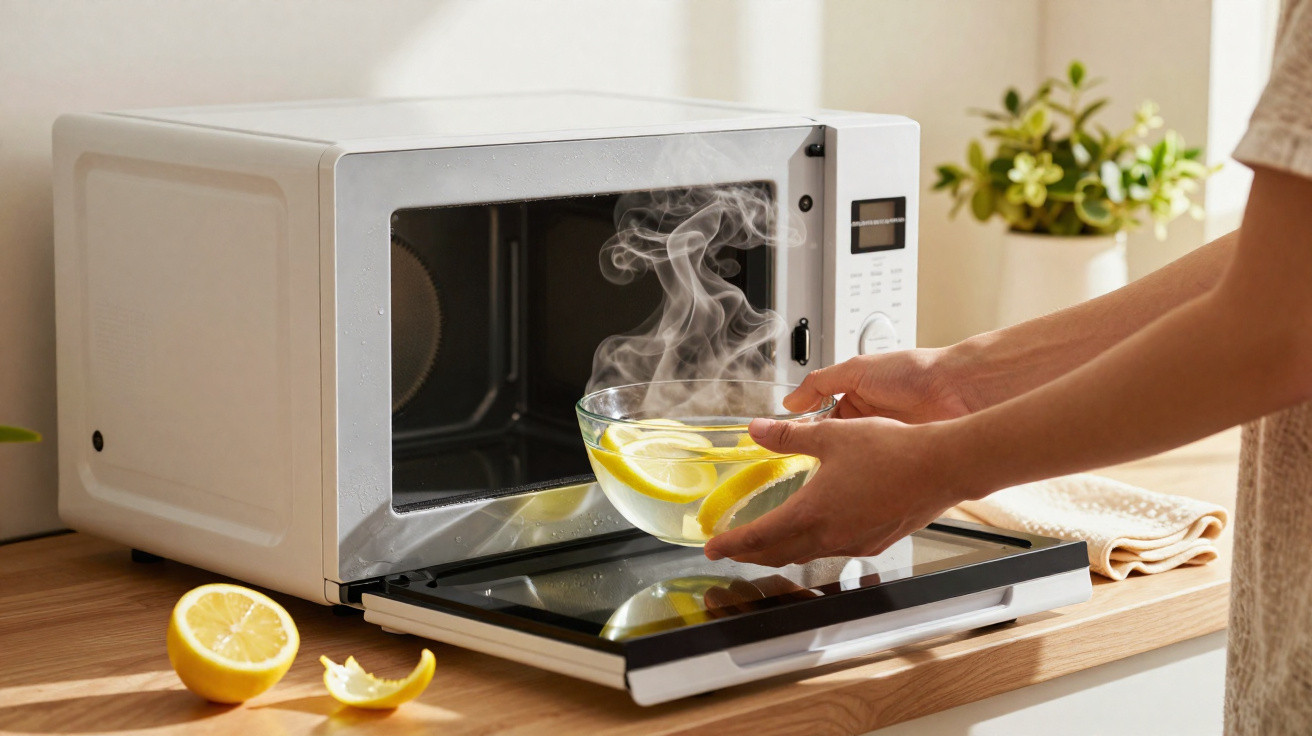
The lemon steam method helps loosen dirt stuck to the interior surfaces and cuts down the old food smell. Hot steam softens dried splashes and thin layers of grease, while the lemon adds a fresh citrus scent and a mild deodorising effect.
To get the best results from this simple home approach, it’s worth following a few basic precautions when mixing and heating the lemon water.
- Use a microwave-safe glass or ceramic bowl, with no metal parts.
- Fill it halfway with water, squeeze in half a lemon or a whole lemon, and add the peel as well.
- Heat until it starts to boil and produces plenty of steam, without letting the water evaporate completely.
- After switching off, keep the door closed for a few minutes so the steam has time to work.
Why do the top and the waveguide need extra attention?
The top of the microwave is one of the most commonly overlooked spots during cleaning, yet it catches plenty of splashes from sauces and oils that rise as food heats. What’s more, steam collecting against the inner ceiling often dries there, leaving faint marks that trap and concentrate smells.
The waveguide cover-a small panel on the inside wall-can also pick up grease and bits of food. This area should be wiped with a soft, slightly damp cloth and no abrasive products, to avoid damage and to reduce the build-up of unpleasant odours.
How to keep the microwave free of old food smell day to day
To stop the old food smell coming back, the key is regular cleaning and not allowing splatters to sit and accumulate. A few small post-use habits, along with periodic lemon steam, keep the interior more neutral and pleasant for different types of cooking.
It’s also worth taking out the turntable to wash it, drying the inside thoroughly, and leaving the door ajar for a few minutes after use. With this straightforward routine, the microwave is far more likely to stay free from stubborn odours and remain a clean, dependable helper in the kitchen.

















Comments
No comments yet. Be the first to comment!
Leave a Comment