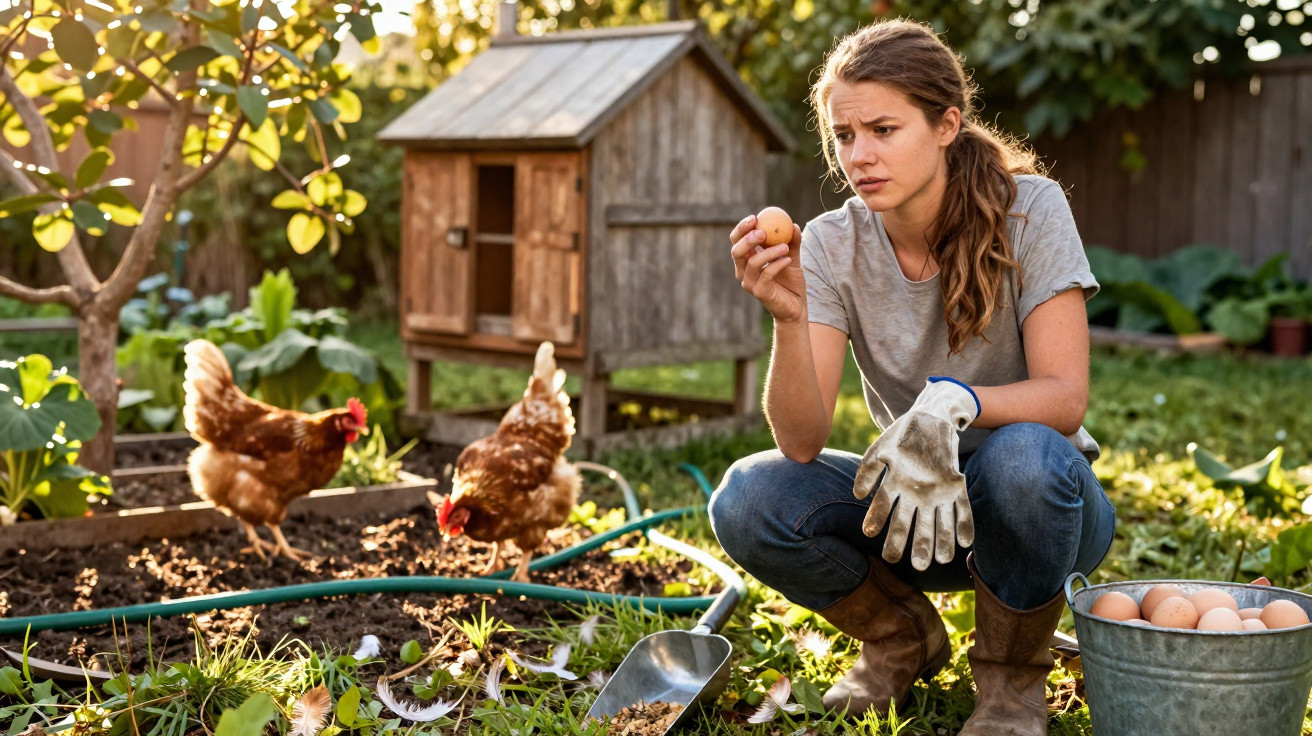
Many people imagine stepping into the garden in the morning, taking a still-warm egg from the nest and feeling as though they are on a farm holiday. Yet the reality of keeping poultry behind the house is often very different: noisy, messy, costly and packed with commitments no brochure mentions.
The dream of chickens and the harsher reality
On Instagram and in gardening magazines, chickens peck contentedly across lush green lawns. They can seem almost like garden ornaments that happen to provide free eggs. Anyone guided by that image is usually brought back to earth quickly.
Chickens scratch, dig and tear up every trace of delicate lawn. Beds that have taken considerable time and money to create can be turned into a moonscape within days. Wherever they feed, an untouched patch is rarely left behind.
What is more, chickens are not animals you can simply put somewhere and forget about. They require attention every day. Feeding, providing water, checking their condition, protecting them from predators, managing their outdoor access, and opening and closing the coop all add up to a fixed daily routine.
Anyone keeping chickens is not bringing home garden decoration, but a small flock that needs care every day – in sunshine, rain, heat and snow.
Noise and smells: a source of stress for neighbours – and you
Many people assume that the only problem is a cockerel. The surprise soon follows: hens can be noisy too. After laying an egg in particular, some birds hold a genuine “victory celebration” – minutes of piercing clucking that easily carries through thin garden hedges.
In densely populated residential areas, this can soon become an irritation. Anyone living in a terraced housing development should ask themselves very honestly, before buying chickens, how tolerant their neighbours are likely to be.
Then there is the smell. A coop that is not cleaned thoroughly soon develops a strong ammonia odour. On warm or humid days, the smell hangs heavily in the air, while flies and other insects can appear in no time.
- Strong chicken odours in hot weather
- Loud clucking – especially early in the morning
- More flies in the garden
- Possible complaints from neighbours
Once the mood next door turns sour, the initial romance fades very quickly. A few eggs on a Sunday morning will no longer be enough to soothe everyone’s nerves.
What chickens really cost – and why you rarely save money
A widespread misconception is that keeping your own chickens saves money over time because you no longer need to buy eggs. In most cases, the sums do not work out.
The initial set-up is already expensive. For a small group of three to five chickens, you need:
- a sturdy coop with perches and nesting areas,
- secure fencing to keep out foxes and martens,
- feeders and drinking containers,
- potentially netting to protect against birds of prey.
Anyone planning properly and with animal welfare in mind will quickly spend €800 to €1,000 – before the first egg has been laid.
There are also ongoing expenses:
- complete feed and supplementary grain
- bedding such as straw or wood shavings
- treatments for worms and parasites
- veterinary costs where necessary
Particularly sobering is the fact that egg production declines substantially with age. During their first and second years, many breeds still lay diligently. From around the third year, production becomes more limited, while from the fourth year some chickens lay only occasionally. The effort remains, but the yield decreases.
Daily work: chickens do not run on autopilot
Keeping chickens means following a daily routine with no bank holidays. The coop must be opened in the morning and shut again in the evening so the birds do not become prey for foxes or martens.
In between, you need to:
- check and replace the water
- top up the feed
- inspect the birds’ health (eyes, comb and plumage)
- collect the eggs
Regular deep cleaning is also essential. Bedding has to come out, the coop must be scraped clean, perches washed and fresh material put in. It is physically demanding, dusty and rarely pleasant-smelling work.
Anyone who already has to talk themselves into taking the bins out in the rain will not be happy with daily chicken care in the long run.
Weather extremes: from frozen water to heat stress
In winter, water containers freeze, sometimes several times a day. That means carrying out warm water. In summer, heat inside the coop can become life-threatening if there is not enough ventilation and shade. Heatstroke and circulatory problems in chickens are not uncommon.
Holiday plans with chickens: spontaneous trips are a thing of the past
Anyone with animals cannot simply leave them alone for three days. Chickens need reliable care in both the morning and evening.
Most friends will be willing to step in for a day. It is something entirely different to check water every day for a week, operate doors correctly and watch for signs of illness or attacks.
A coop accidentally left open or a forgotten water container can have dramatic consequences – from animals dying of thirst to a nocturnal massacre by a fox.
Disease and predators: the often-overlooked downside
Chickens may look robust, but that is true only to a degree. They can suffer from a range of illnesses, including intestinal parasites and coccidiosis, an intestinal infection that can be fatal without treatment.
Red poultry mites are especially feared. These tiny parasites hide in cracks and crevices in the coop during the day, then suck blood at night. The birds become pale and weak, and lay fewer eggs or none at all.
There are also diseases such as bird flu. During high-risk periods, authorities may order birds to be housed indoors. The chickens may then be prohibited from going outside for weeks, turning the dream of free-ranging in the garden into supervised confinement.
Predators are another concern:
- Foxes can kill an entire group within minutes.
- Martens and polecats can squeeze through remarkably small gaps.
- Birds of prey can take inattentive or young birds.
A single forgotten bolt on the coop door can cost an entire flock of chickens.
Rules, regulations and neighbourly frustration
Before driving the first nail into the coop, it is worth checking local rules. Councils may restrict chicken keeping, particularly in densely built-up residential areas. Planning conditions or building management rules in owner-occupied developments can also contain explicit bans.
Even where everything is legally in order, the social aspect remains. Constant clucking, smells and increased numbers of flies can result in formal complaints. In extreme cases, disputes over chicken keeping end up in court.
Who chickens suit – and who they do not
Chickens in the garden can be a wonderful addition. Children can learn to take responsibility and understand where food comes from. Many keepers value quietly watching their birds in the evening and enjoy every egg.
However, this requires four things:
- dependable time every day, morning and evening,
- enough space and secure fencing,
- a budget for the initial purchase and ongoing costs,
- surroundings where noise and smells are tolerated.
Anyone motivated primarily by cheap eggs, attractive garden photos or the trend for “self-sufficiency” can easily become overwhelmed. Chickens are pets with clear needs, not decorative garden accessories.
Practical alternatives to keeping your own chicken coop
Those who want fresh, high-quality eggs without being tied to a coop have options:
- a regular arrangement with a local farm or egg vending machine,
- membership of a community-supported agriculture scheme,
- shared involvement with community chickens through a club or neighbourhood project.
This maintains a connection with the animal and the product – without every household having to manage its own coop, fence and emergency plan.
Ultimately, an honest assessment is what matters: does a daily animal-care project genuinely fit your life, your property and your surroundings? Answering that question clearly protects not only your own nerves, but above all the animals that depend on reliable people.











Comments
No comments yet. Be the first to comment!
Leave a Comment