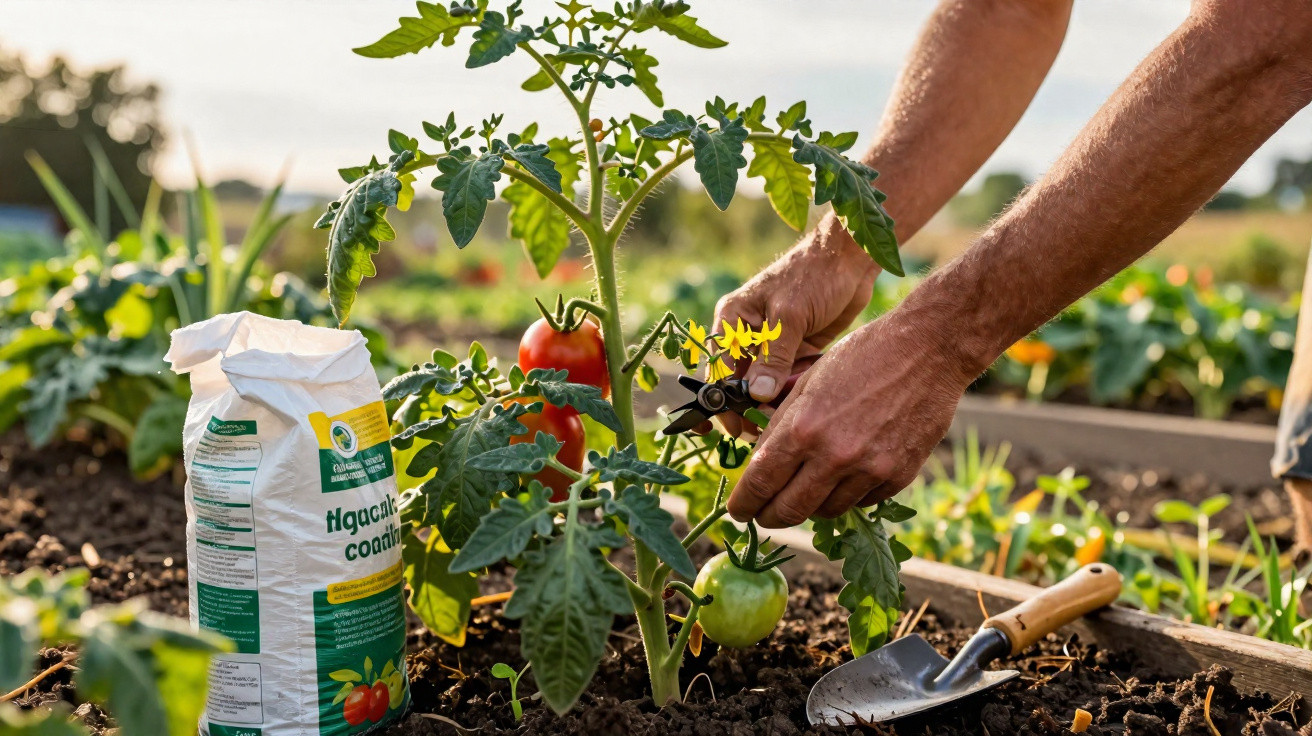
Sarah looked at her tomato plants with the particular frustration that August can inflict on a gardener. Only three months before, they had been the highlight of her plot: tall, leafy and covered in yellow blooms promising baskets of homegrown tomatoes. Now, exhausted by the heat, they resembled weary soldiers, with thick woody stems, yellow leaves at the base and no fresh flower buds anywhere. The handful of tomatoes still on the vines remained resolutely green, as though ripening was no longer on their agenda. Most gardeners know that feeling, when the garden refuses to fit around the meals you had planned. What many people miss is that this August lull is not permanent - it is a request for help.
The August Mystery Every Tomato Grower Faces
Take a look around neighbourhood gardens in mid-August and the same pattern appears in garden after garden. Tomato plants that were once prolific producers begin to resemble decorative shrubs rather than productive food plants. Flowers disappear, the plants seem depleted, and many gardeners begin preparing for autumn tidy-ups, convinced that the growing season has finished.
Last year, my neighbour Jim picked precisely 47 tomatoes from his four plants before early July, and he was almost forcing them on anyone willing to accept them. By 15 August, however, those very same plants had failed to set a single new fruit for three consecutive weeks. They were neither ill nor dying; they were simply… tired. Every summer, this same situation is repeated in millions of gardens across the country.
During the height of summer, tomato plants undergo what botanists term “physiological fatigue”. Instead of putting energy into reproduction - producing flowers and fruit - the plant directs it towards survival, sustaining its current structure. Once temperatures repeatedly reach the high 20s and low 30s °C, even highly vigorous varieties can reduce flower production to almost nothing. In effect, the plant is pausing.
The Revival Technique That Changes Everything
The approach that transformed my August harvests was firm pruning paired with focused feeding. Remove every lower branch up to the first flower cluster, including branches that still carry green leaves. This dramatic pruning redirects the plant’s energy towards the upper areas where fresh growth and flowers can develop.
Taking off apparently healthy growth can feel harsh, but the method is worth trusting. Many gardeners are overly cautious with their secateurs and retain foliage that uses energy without helping fruit production. In truth, few people enjoy cutting back plants they have carefully tended all season. That reluctance is understandable, but the outcome makes the case clearly.
“The key is understanding that tomato plants are like teenagers – they need boundaries and structure to perform their best. August pruning is tough love that pays off in September harvests.” – Master Gardener Patricia Williams
Start the following feeding routine as soon as pruning is complete:
- Water thoroughly with diluted fish emulsion (1 tablespoon per 4.5 litres)
- Spread one cup of compost around the plant base
- Spray the leaves with Epsom salt solution (1 teaspoon per 1.1 litres of water)
- Repeat each week for three weeks
Your September Garden Awaits
Around 10–14 days after carrying out this revival treatment, the change begins. Fresh flower clusters should appear along the upper stems and, roughly two weeks later, small green fruits will start to develop. Your late-season harvest can deliver the sweetest tomatoes of the year, as cooler September nights concentrate their sugars. These autumn fruits offer a depth of flavour that July tomatoes seldom achieve. Seemingly appreciative of their August reset, the plants respond with fresh energy and may continue harvesting well into October. Every gardener deserves that rewarding second flush.
| Key point | Detail | Value for the reader |
|---|---|---|
| Physiological fatigue | Plants cease flowering during extreme heat | Explains why the problem happens |
| Aggressive pruning | Remove lower branches up to the first flower cluster | Redirects energy immediately |
| Targeted feeding | Fish emulsion + compost + Epsom salt every week | Restores nutrients quickly |
















Comments
No comments yet. Be the first to comment!
Leave a Comment